Is Mackinac Island Accessible? What I Verified on Foot
Most accessibility guides to Mackinac Island were written by people who never tested a single surface.
I did. I use stability poles and I have had falls, so a flat-path claim does not earn my trust until my own feet confirm it. Mackinac is more accessible than its Victorian hills suggest and less accessible than a quick search promises, and the truth depends entirely on where you want to go. This is what I found on the ground, step by step.
A note before we start: this article reflects my own visits and the conditions I encountered. Accessibility features change, so confirm current details with the providers I name. Some of the links below point to my related guides, and I earn a small commission if you book through them at no extra cost to you.

The short answer
The 8.2-mile perimeter is flat and paved, and it is easy. Downtown is mostly level with curb cuts. The interior, where many of the famous attractions sit, climbs steep bluffs and includes stairs. So the island rewards a clear plan: the shoreline and downtown are open to nearly everyone, while the heights take more thought.
If you use a wheelchair, scooter, or stability aids, you can have a full, satisfying day here. You will simply route around the hills rather than over them.
Getting here: the ferry

Your trip starts with a ferry, and both main lines run wheelchair- and scooter-accessible vessels. There is no charge to bring an electric scooter, power wheelchair, or manual wheelchair across. Both companies also offer accessible parking at their mainland docks in Mackinaw City and St. Ignace.
For schedules and 2026 prices, see my Mackinac Island ferry guide.
When I boarded, the crew stayed nearby and attentive – not hovering, but watchful and ready if I needed a hand. I appreciated that balance. It let me board at my own pace with my poles, knowing help was right there if the footing gave me trouble.
The perimeter loop: the island’s best accessible feature
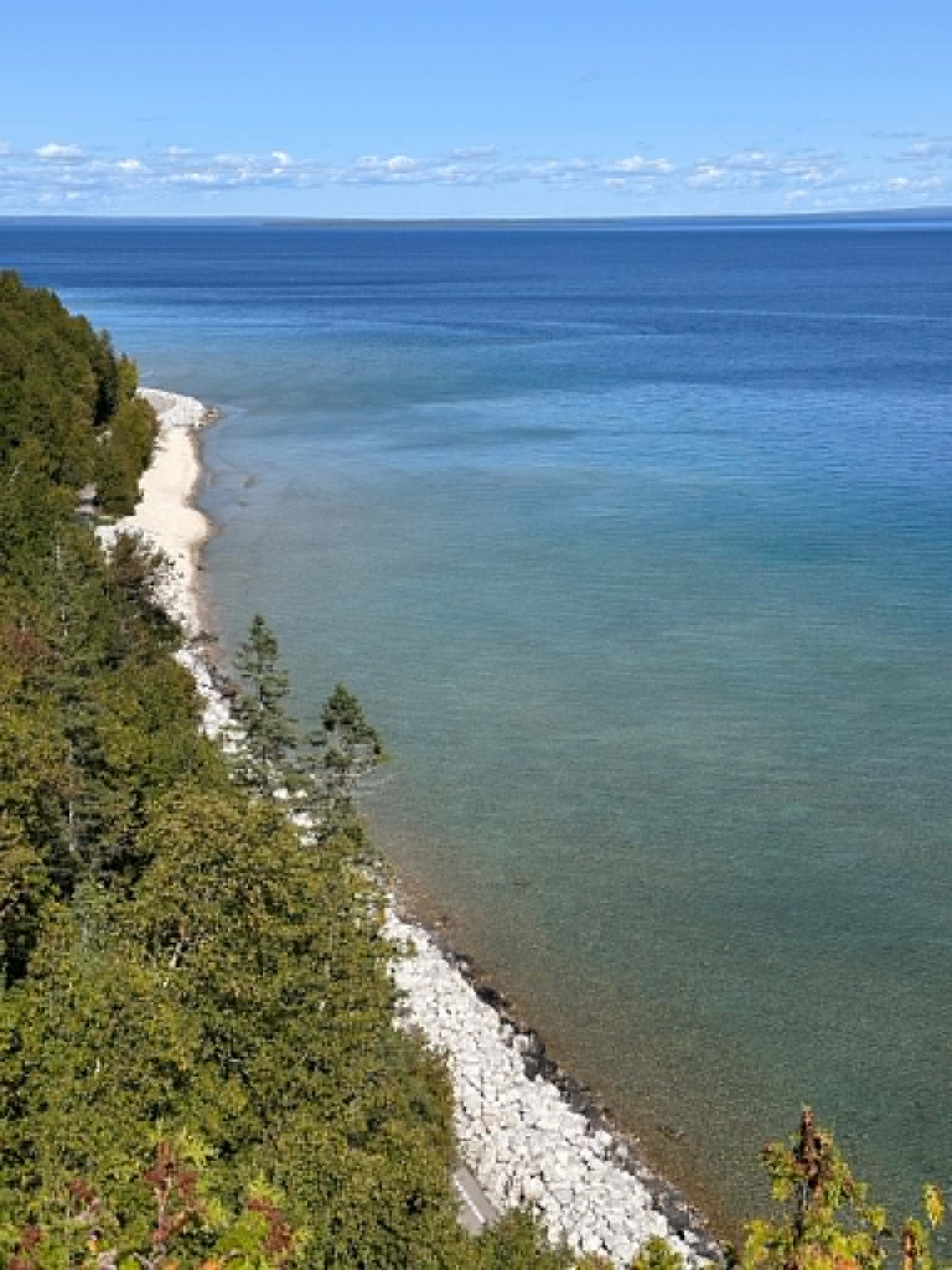
M-185 rings the island for 8.2 miles, and it is the single best thing the island offers a visitor with mobility needs. The surface is paved and level, with the water on one side and the bluffs on the other. No cars share it, so the only traffic is bikes, the occasional carriage, and other walkers.
You do not have to commit to the full loop. The stretch leaving downtown toward Arch Rock is gentle and scenic, and you can turn back whenever you like.
I walked the stretch nearest downtown, and the footing was solid the whole way — firm, even pavement with no loose or broken patches to catch a pole. I did not go far around the loop, but what I covered was the easiest, steadiest walking surface on the island.
Downtown: mostly level, with old buildings
Downtown sits on the flat, and the sidewalks have curb cuts. Moving along Main Street is straightforward. The catch is the buildings themselves: many are more than a century old, so some shops and restaurants have a step at the door or a narrow entry. Nothing stops you from enjoying the district, but plan for the odd threshold.
The fudge shops were easy — level entries and wide doors, no step to manage. Not every storefront is built that way, so if a particular shop matters to you, it is worth a quick look at the doorway before you commit, but the main fudge stops downtown were no trouble.
Getting up the hills: the accessible carriage
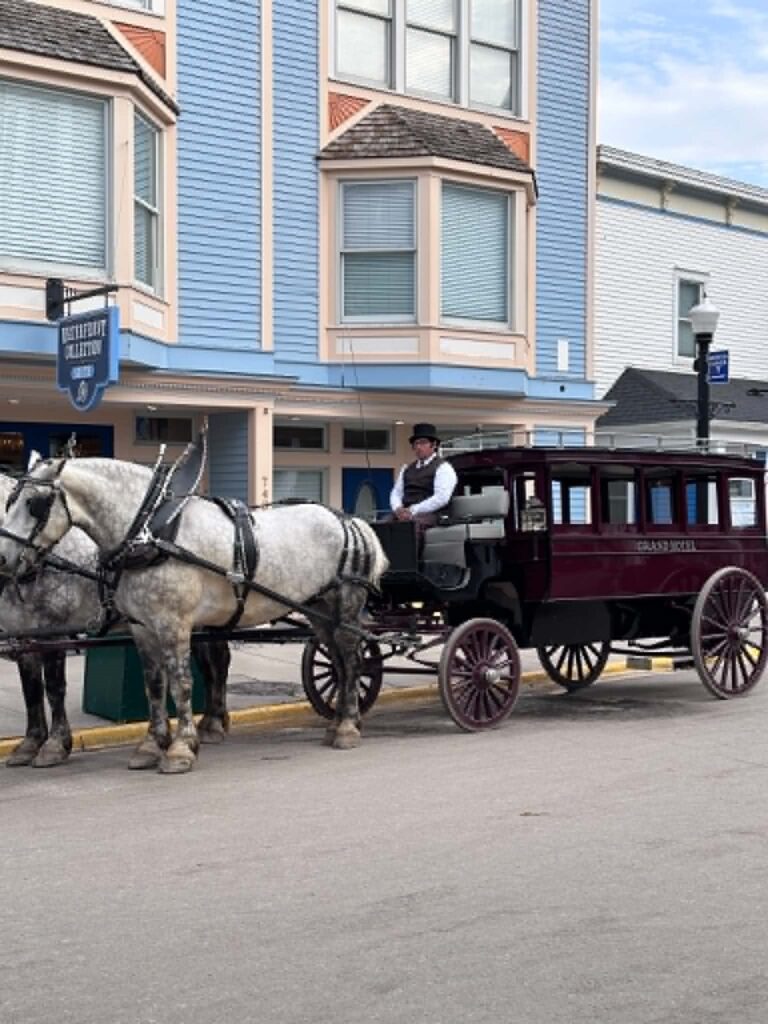
The interior attractions sit uphill, and the answer for many visitors is the horse-drawn carriage.
Mackinac Island Carriage Tours operates one accessible, ramped carriage. It holds one or two wheelchairs, or one scooter or power chair, plus eight to ten seated passengers.
Two things matter here. First, there is only one such carriage, and it runs first come, first served, with no advance reservations for the public tour. Arrive early. Second, for an accessible taxi ride rather than the full tour, you call ahead. The carriage tour reaches Fort Mackinac, Arch Rock, and the Grand Hotel area, so it doubles as a way to see the heights without climbing them.
I will be straight with you: I did not use the accessible carriage on my visit, so I cannot describe the ramp or the wait firsthand. Because there is only one and it runs first come, first served, I would call Mackinac Island Carriage Tours ahead of your trip to confirm how it works that day and to arrange an accessible taxi if you need one.
Fort Mackinac: use the right entrance
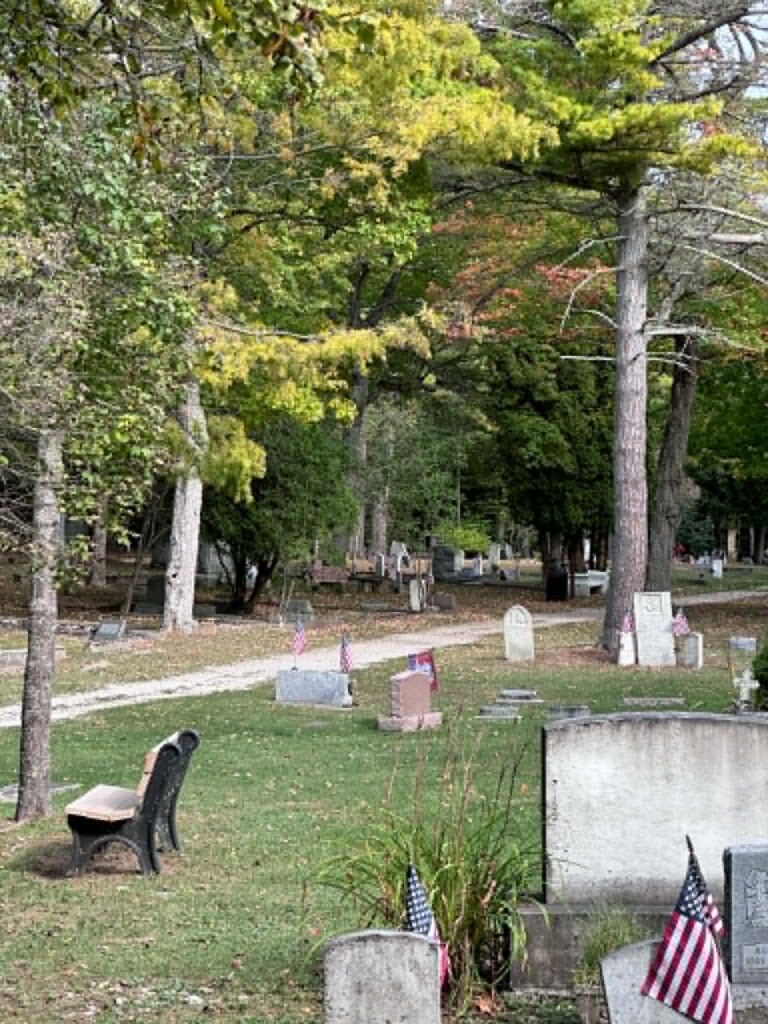
Fort Mackinac is the trickiest major attraction, and the detail competitors miss is the entrance. The historic ramp walk up from downtown to the South Sally Port is steep and includes steps, so it is not suitable for wheelchairs and is hard with stability aids. The accessible route is different: carriage tours and taxis carry visitors to the north side of the fort, which avoids that climb.
Once inside, Mackinac State Historic Parks loans motorized wheelchairs on a first-come basis at its sites, offers Guides to Access at admissions, and welcomes service animals in all buildings. Outdoor surfaces inside the historic sites shift from gravel and grass to sand and concrete, so wheels and poles meet mixed footing.
I saw the fort from below but chose not to go in. From the street the climb to the South Sally Port looked exactly as steep as its reputation, and with my poles I was not going to attempt those steps. If I were determined to go inside, I would take the carriage route to the north side rather than tackle that walk — and that is the route I would point any visitor with mobility needs toward.
Trails and the interior
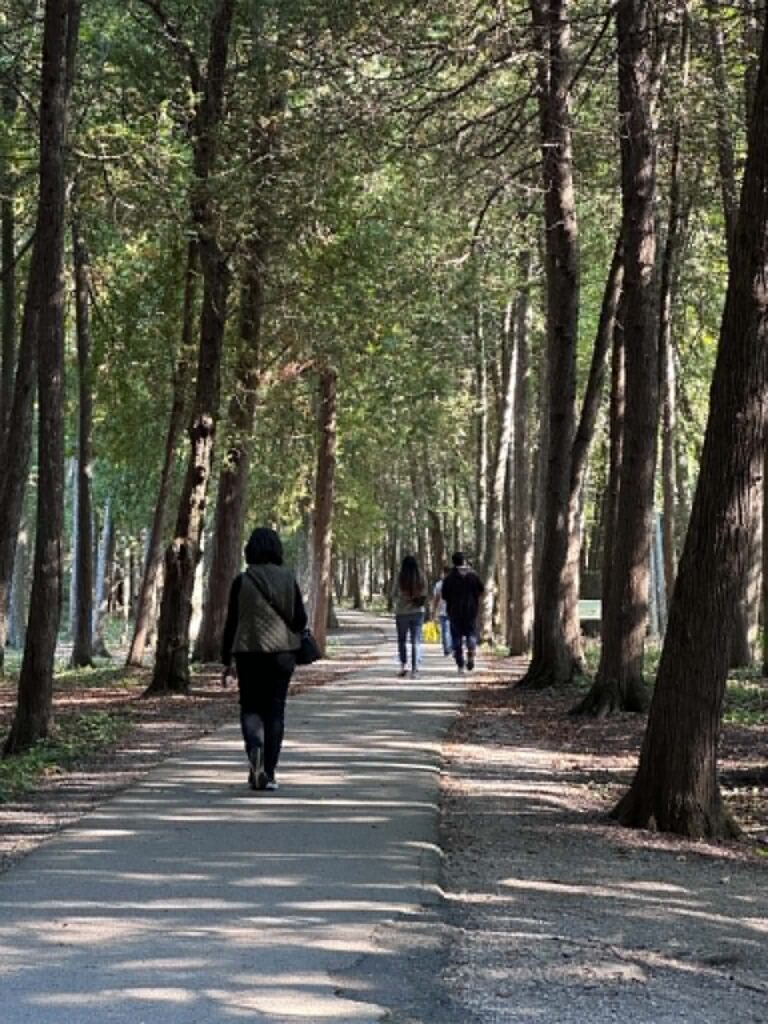
The interior is a mixed picture. A few paths are paved and level, but most interior trails are packed dirt or gravel with moderate hills. If you want woods and quiet without a climb, scout the surface first or take the carriage to a high point and explore from there on level ground.
I walked several interior paths, and what struck me was how much they varied. Some stretches were paved and level and easy with my poles. Others turned to packed dirt, gravel, or a grade steep enough that I slowed down and watched my footing. That mix is the honest picture: do not assume one interior path tells you about the next. If you use wheels or aids, scout the surface ahead or take the carriage to a high point and explore from there on level ground.
Renting a scooter or wheelchair
You can bring your own device free on the ferry, or rent on the island. Electric scooters and manual wheelchairs are available through island bike shops, and it is wise to call ahead to reserve rather than count on walk-up availability. The Tourism Bureau can also help arrange electric carts, adult strollers, and the accessible carriage.
Where to stay
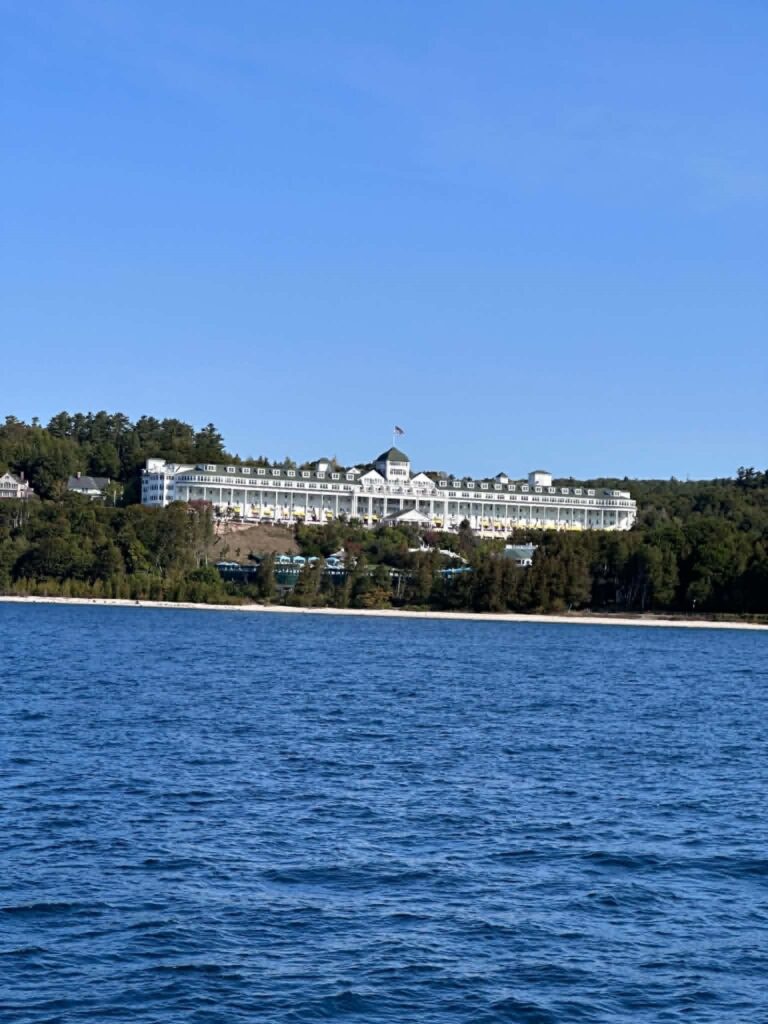
The island has accessible lodging across resorts and hotels as well as smaller inns and B&Bs, but the specifics vary widely by property and building age. Because so many buildings are historic, I would not assume a room is accessible from a website alone. Call the property and ask about the exact features you need.
One thing worth knowing from my research: roll-in shower rooms exist on the island but are limited, and the Grand Hotel is one property that offers them. I did not stay in one myself, so treat this as a lead to confirm rather than a firsthand account — call the property, name the exact features you need, and verify before you book.
A note on vision, hearing, and sensory needs
Accessibility is more than wheels. For vision, the car-free streets remove a major hazard, though horses and bikes and the uneven historic surfaces remain. For hearing, the island is calm and quiet, with no traffic noise. For sensory needs, the shoulder seasons and early mornings are much less crowded than peak summer, which makes for a gentler visit.
On the sensory side, I can speak from my own preference: one of the reasons I like to stay at the Grand Hotel is that it sits apart from downtown, where it is quiet and peaceful. The island is calm by mainland standards, with no car engines, but stepping back from the busier downtown blocks makes a real difference if crowds or noise wear on you. Early mornings and the shoulder seasons are gentler still.
My honest take
Mackinac Island earns a qualified yes. The flat loop and downtown make it genuinely welcoming, and the accessible carriage opens up the heights. The gaps are real too: one accessible carriage, historic buildings with steps, and interior trails that are not all level. Plan around the hills, call ahead for the carriage and lodging, and you can have a full day here.
Visiting in the off-season? See my guide to Mackinac Island in October.
For everything else to see and do, start with my Things to Do on Mackinac Island guide.
Frequently Asked Questions
Partly. The flat, paved 8.2-mile perimeter loop and downtown are wheelchair accessible, with curb cuts. Interior attractions sit on hills, but one ramped accessible carriage and the fort’s north-side access help you reach the heights. Confirm current details with each provider before you go.
Not by the steep South Sally Port walk, which has steps. Mackinac Island Carriage Tours and taxis carry visitors to the north side of the fort, and the park loans motorized wheelchairs on site, first come, first served.
Yes, one. Mackinac Island Carriage Tours runs a single ramped carriage that holds one or two wheelchairs or a scooter, plus other seated passengers. It is first come, first served with no public reservations, so arrive early or call ahead for an accessible taxi.
Yes, at no charge. Both main ferry lines run accessible vessels and carry electric scooters, power wheelchairs, and manual wheelchairs free. Both also offer accessible parking at their mainland docks.
Yes, downtown sits on the flat and has sidewalk curb cuts. The main limit is that many shops and restaurants are over a century old, so some have a step at the door or a narrow entry.
Yes. Mackinac State Historic Parks welcomes service animals at all sites and in all buildings, including Fort Mackinac.
Yes. Island bike shops rent electric scooters and manual wheelchairs, and it is wise to call ahead to reserve rather than rely on walk-up availability. You can also bring your own device across on the ferry at no charge, and the Tourism Bureau can help arrange electric carts or the accessible carriage.
It can be, with a plan. The flat perimeter loop and downtown suit a relaxed, level visit, and the accessible carriage reaches the uphill sights without a climb. The limits are the historic buildings with steps and the interior trails that are not all level, so route around the hills and call ahead for the carriage and lodging.
This article is based on my own visits to Mackinac Island. Accessibility features and services change, so please confirm current details with the ferry lines, Mackinac Island Carriage Tours, the Tourism Bureau, and individual lodgings before your trip.