Northern Michigan Winter: Real Temps & What’s Open
Northern Michigan in winter is worth the trip — but knowing what’s true before you go matters more than another generic “beautiful snowy landscape” description. This guide covers real temperatures and snowfall, verified activities, where to stay, and what to know before you drive north, including a few corrections to information you’ll find repeated elsewhere.
Wandering Michigan Wisconsin contains affiliate links. If you make a purchase using one of the links below, we may receive compensation at no extra cost to you. We only recommend products and services we use and trust.
Read our disclaimer for more information.

Plan Your Trip With My Favorite Resources
Best accommodation site: Booking.com
Book day tours here: Viator.com
Purchase travel insurance here: SafetyWing
Is Northern Michigan Cold in Winter?
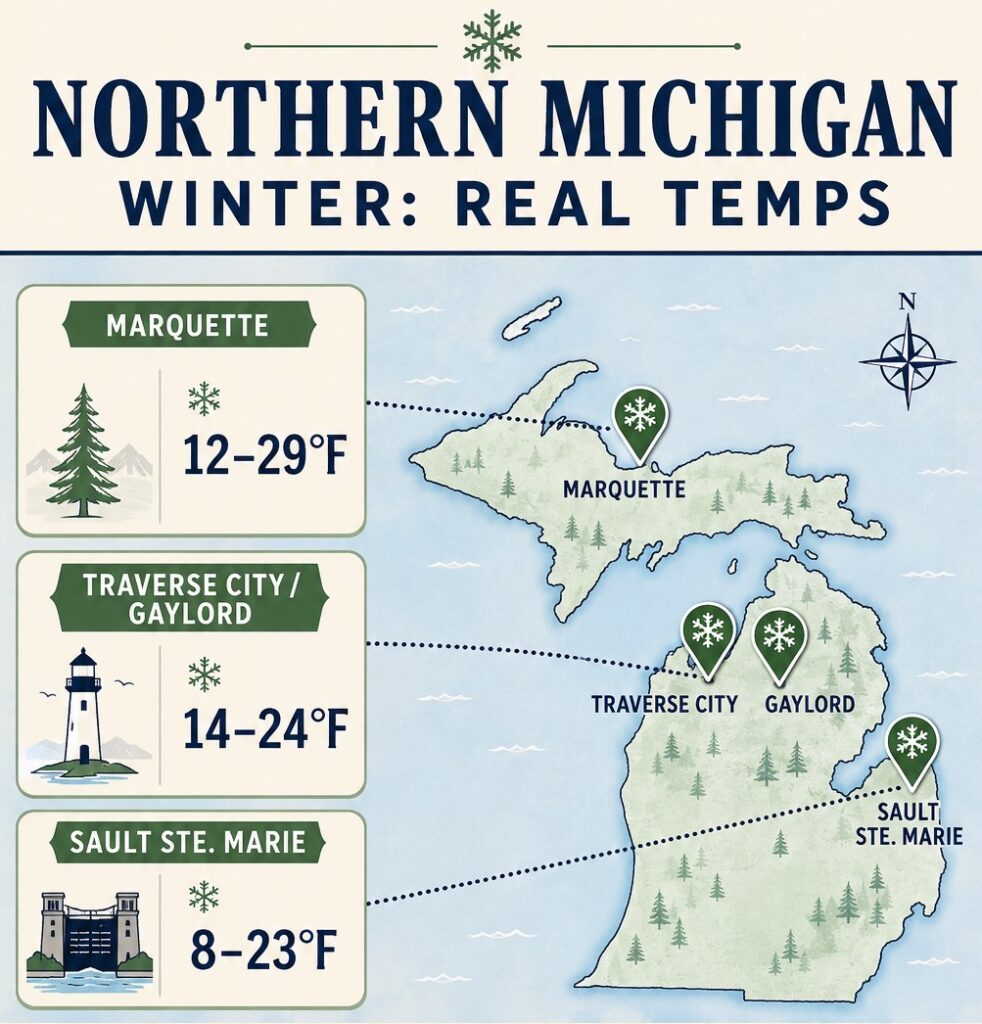
Yes — cold, especially from late December through February. January is typically the coldest month across the region. Average January temperatures run roughly:
- Marquette: 12–29°F
- Sault Ste. Marie: 8–23°F
- Traverse City/Gaylord area: 14–24°F
These are averages — actual conditions swing well below these ranges during cold snaps, and wind chill makes it feel colder. Snowfall varies by location: Marquette averages around 120–150 inches per year depending on the data source and specific years, making it one of the snowiest cities in the country below 1,000 feet in elevation. Sault Ste. Marie’s winter snowfall ranges roughly 30–175 inches depending on the year.
Layer up and you’ll be fine — many outdoor activities like skiing keep you warmer than you’d expect once you’re moving.
Is Northern Michigan Worth Visiting in Winter?
Yes. Beyond the scenery, real winter-specific activities exist here that you won’t find any other season — frozen waterfalls, ice climbing, and a lantern-lit Nordic spa scene unique to the region.

Things to Do in Northern Michigan in Winter
1. Go Downhill Skiing or Snowboarding
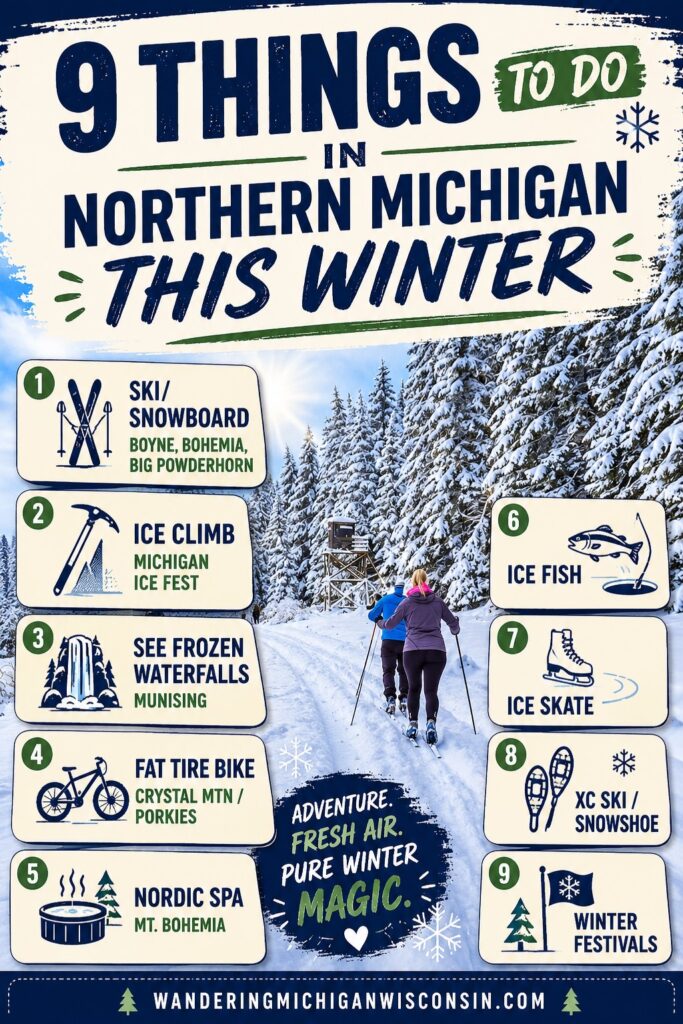
Northern Michigan has real ski terrain for every level. Boyne Mountain anchors the Lower Peninsula. In the UP, Mount Bohemia and Big Powderhorn draw serious skiers, and Pine Mountain adds a family-friendly ski-in/ski-out option. For full resort profiles — verified amenities, accessibility notes, and booking links — see 9 Best Winter Resorts in Michigan.
2. Attend a Winter Festival
Several real, currently-running winter festivals are worth building a trip around:
- Michigan Ice Fest (Munising) — the region’s premier ice climbing festival, typically held in February
- Ice Breaker Boyne (Boyne City) — a multi-event winter festival in downtown Boyne City
- WinterFest (Traverse City) — ice sculpture carving, sledding, bonfires, and live music downtown
- I-500 Snowmobile Race (Sault Ste. Marie) — the world’s longest oval snowmobile race, run in early February
Exact dates shift every year — confirm current dates directly with each event before planning around them.
3. Explore Frozen Waterfalls
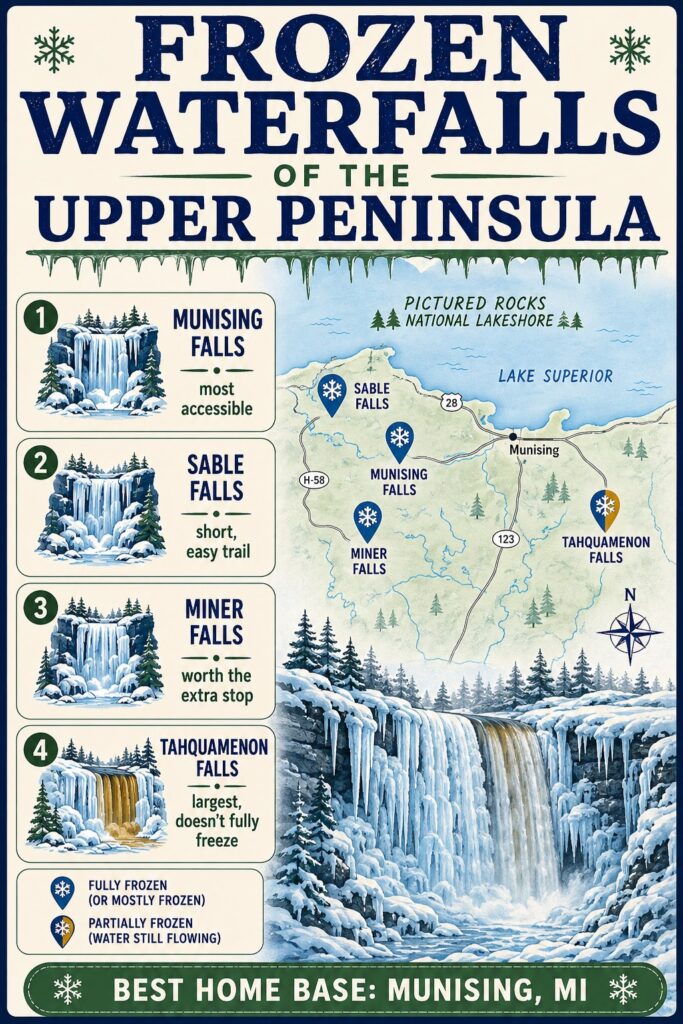
Several Upper Peninsula waterfalls freeze in dramatic fashion each winter. Munising, near Pictured Rocks National Lakeshore, is the best base — Munising Falls and Sable Falls are the most accessible, and Miner Falls is worth the extra stop if you have time. Tahquamenon Falls State Park is home to Michigan’s largest waterfall; due to its volume it doesn’t freeze completely, but the contrast of amber water against ice and snow is still striking. For the full seasonal breakdown, see Tahquamenon Falls Winter.

4. Try Ice Climbing
Michigan Ice Fest transforms Munising into ice climbing headquarters each February — walk-up opportunities for first-timers, plus classes for experienced climbers. For the full breakdown of dates, locations, and what to expect, see 21 Upper Peninsula Winter Attractions.
5. Go Fat Tire Biking
Crystal Mountain Resort maintains 6 miles of groomed winter bike trails with rental equipment available. The Porcupine Mountains Wilderness State Park also maintains over 20 miles of multi-use trails open to fat tire bikes and cross-country skis alike, with snowshoers welcome too.
6. Try Ice Fishing
Northern Michigan’s many inland lakes freeze solid most winters, making for good ice fishing conditions across the region. Bluegill, perch, northern pike, walleye, and trout are all commonly caught. Always check current ice thickness reports for your specific lake before heading out — conditions vary year to year and even week to week.
7. Get Cozy at a Winter Spa
Mount Bohemia’s Nordic Spa in the Keweenaw Peninsula is unique for the region — four pools, a 30-person hot tub, and multiple saunas and steam rooms. Important correction: for the 2025–26 season, it’s season-pass access only — day passes aren’t being sold this season. For the full amenity list and current access policy, see 21 Upper Peninsula Winter Attractions.
8. Go Ice Skating
Outdoor ice skating rinks are common throughout Northern Michigan towns and ski resorts in winter. One distinctive option: St. Ignace opens an ice rink on Lake Huron’s Moran Bay once it freezes, including pond hockey games.

9. Try Cross-Country Skiing or Snowshoeing
Hundreds of miles of trails serve cross-country skiers and snowshoers across the region. Crystal Mountain’s network (25km, rated #1 in Michigan by Midwest Living reader poll, with 2km lit for night skiing) is a standout, alongside the Noquemanon Trail Network near Marquette and trails throughout Porcupine Mountains Wilderness State Park. If you’re into birdwatching, winter trails double as good birding routes — see 11 Winter Birds of Michigan for what to look for.
Accessibility Notes for Winter Visitors
Mobility: Most major ski resorts and lodges in this guide offer ADA-compliant rooms; adaptive ski programs vary by resort and season. See individual resort accessibility notes in 9 Best Winter Resorts in Michigan. For winter festivals, footing on ice and packed snow is a real consideration at outdoor events — most festival organizers can advise on accessible viewing areas if you call ahead.
Vision: Snow glare is a genuine factor for winter driving and outdoor activities across this whole region — polarized sunglasses help. Festival crowds and unfamiliar towns can be disorienting; download offline maps before you go, since cell service is limited in parts of the Upper Peninsula.
Hearing: Snowmobile and event noise at festivals like the I-500 can be significant — bring hearing protection if that’s a concern. Most ski resort adaptive programs can accommodate hearing-related communication needs with advance notice.
Sensory: Winter festivals are loud, crowded, and cold all at once. If sensory overload is a concern, arrive early before crowds build, and identify a warm, quiet space (a nearby café or your car) as a reset point.
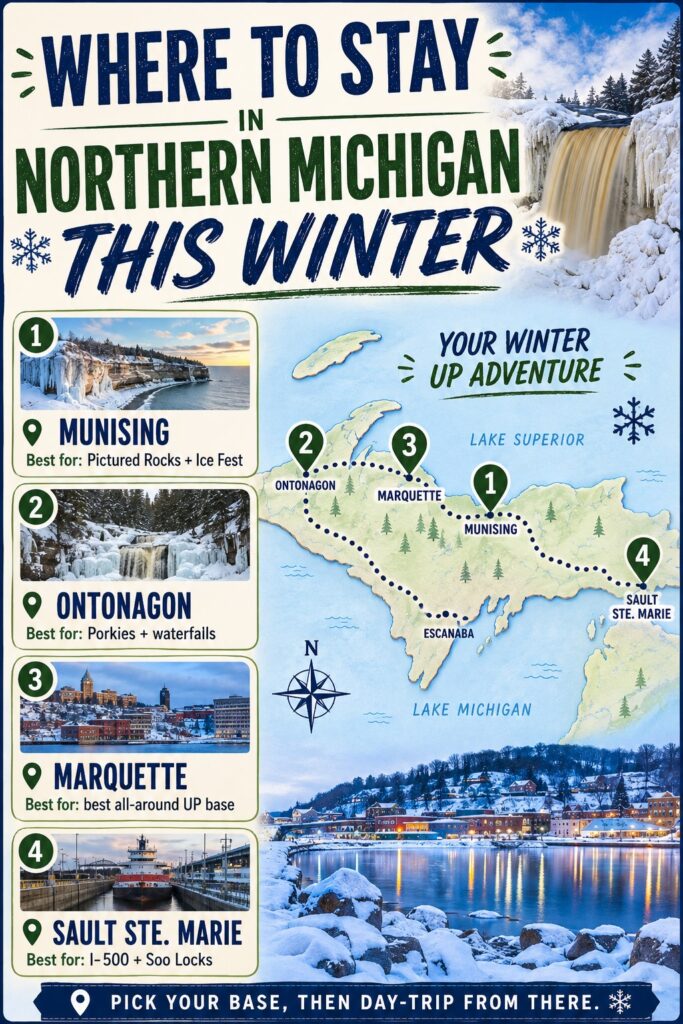
Where to Stay in Northern Michigan in Winter
For a full ski resort deep-dive with verified amenities and accessibility notes, see 9 Best Winter Resorts in Michigan — that’s your best resource if a resort stay (Boyne Mountain, Great Wolf Lodge, and others) is your priority.
For other Northern Michigan bases:
Munising, MI — ideal for Pictured Rocks and frozen waterfalls, with Michigan Ice Fest as an added draw each February. Comfort Inn & Suites Munising offers lake views and complimentary breakfast.
Ontonagon, MI (near Porcupine Mountains Wilderness State Park) — a good base for ski trails and waterfalls, with Lake Superior scenery right outside your door. Check current cabin and vacation rental availability for this area, since specific listings change over time.
Marquette, MI — the largest UP city, a strong home base for exploring the whole Upper Peninsula, with downtown walkability and Lake Superior views at many properties.
Sault Ste. Marie, MI — worth visiting for the I-500 and Soo Locks. Hampton Inn Sault Ste Marie offers an indoor pool and complimentary breakfast in an easy-to-reach downtown location.
Winter in Northern Michigan: Visiting Tips
Enjoy the outdoors anyway. Cold shouldn’t keep you inside — skiing and sledding both keep you warmer moving than you’d expect standing still, and even a slow walk on an outdoor rink beats sitting in a warm car all trip.
Dress in true layers. A base layer under an insulating mid-layer, topped with a waterproof outer layer, beats one heavy coat. Don’t skip a hat and gloves, and bring a scarf for wind.
Drive a 4-wheel or all-wheel drive vehicle if possible, heading into the Upper Peninsula. Snowy roads are a real factor here, not a minor inconvenience.
Watch the weather before you drive. Snowstorms are frequent and can bring low visibility along with snow and ice on the road. Roads can take time to get plowed after a storm in less populated areas — build that into your timeline.

Northern Michigan Winter: FAQ
Yes. Marquette averages roughly 120–150 inches of snow per year depending on the data source, among the highest totals in the country outside mountain regions. Sault Ste. Marie’s winter snowfall ranges roughly 30–175 inches depending on the year.
January averages run roughly 12–29°F in Marquette, 8–23°F in Sault Ste. Marie, and 14–24°F around Traverse City and Gaylord. Actual temperatures swing well below these averages during cold snaps.
Yes, in the Upper Peninsula and northern Lower Peninsula especially. Snowstorms are common, temperatures regularly drop well below freezing, and wind chill can make it feel far colder than the air temperature alone.
Cold and snowy, but scenic — snow-covered pines and frozen waterfalls make for real winter beauty, and crowds run far lower than summer or fall. It rewards visitors who dress properly and plan around real conditions rather than a postcard version of winter.
Not for the 2025-26 season — the spa is currently season-pass access only. This is a change from prior seasons that offered day passes, so confirm current policy directly with Mount Bohemia before planning a visit around the spa specifically.
Munising, near Pictured Rocks National Lakeshore, offers the most accessible cluster — Munising Falls and Sable Falls are easy stops, with Miner Falls worth the extra time. Tahquamenon Falls is Michigan’s largest waterfall but doesn’t freeze completely due to its volume.
It requires real preparation — a 4-wheel or all-wheel drive vehicle is recommended, especially in the Upper Peninsula. Check weather and road conditions before driving, since snowstorms can bring low visibility and roads may take time to get plowed after a storm in less populated areas.
It varies by activity and location. Ski resorts generally offer ADA-compliant lodging with adaptive program availability varying by resort — see the full breakdown in 9 Best Winter Resorts in Michigan. Winter festivals involve outdoor, icy footing; most organizers can advise on accessible viewing areas if contacted ahead of time.
Final Thoughts: Northern Michigan Winter
Northern Michigan in winter delivers on the scenery, but it rewards visitors who plan around real conditions instead of a vague “it’s beautiful” description. Check current festival dates, confirm the Mount Bohemia spa policy if that’s part of your plan, and build extra time into any Upper Peninsula drive. Do that, and this is one of the most rewarding winter trips in the Midwest.
More Wandering Michigan Wisconsin
9 Best Winter Resorts in Michigan
Tahquamenon Falls Winter: Complete 2026 Guide