Best Lake Michigan Beach Towns: All 4 States Covered (Local Guide 2026)
Lake Michigan wraps around four states like a freshwater sea, and every mile of shoreline delivers something different — Victorian lighthouses, towering sand dunes, art galleries tucked behind boardwalks, and beaches so wide and quiet you can walk for an hour without passing another soul. I grew up in Detroit and now live in central Wisconsin, which means Lake Michigan has been the backdrop of my life from both sides. I have stood on the Michigan shore watching the sun go down over the water, and I have stood on the Wisconsin shore watching it rise over the same lake. I have crossed it on the SS Badger in the early morning with my husband, and I have driven every inch of its perimeter on the Lake Michigan Circle Tour. This guide covers the best beach towns in all four states — Michigan, Wisconsin, Indiana, and Illinois — because no competitor does.
Wandering Michigan Wisconsin contains affiliate links. If you make a purchase using one of the links below, we may receive compensation at no extra cost to you. We only recommend products and services we use and trust.
Read our disclaimer for more information.
I travel with stability poles and write about accessibility from lived experience, not press releases. Every town in this guide has been evaluated for mobility access, sensory considerations, vision and hearing accommodations, and whether dogs are genuinely welcome. Prices and hours are verified against official sources as of 2026. Whether you are planning a week-long beach vacation, plotting the full Lake Michigan Circle Tour, or looking for one perfect weekend town, this guide gives you the honest, verified information you need to choose well.
What Makes Lake Michigan Beach Towns Special
Lake Michigan is the only Great Lake located entirely within the United States. Its 1,640 miles of shoreline touch Michigan, Wisconsin, Indiana, and Illinois, making it accessible to more than 30 million people within a day’s drive. The eastern shore — Michigan’s side — catches the prevailing westerly winds after they travel the full width of the lake, which is why Michigan beaches have the warmest water and the deepest sand dunes on the Great Lakes. The western shore, Wisconsin’s side, gets the sunrise and the sheltered harbors. The southern tip anchors Indiana Dunes National Park and Chicago’s famous lakefront.
Each state brings a distinct character to the shoreline. Michigan delivers resort towns with lighthouse piers, dune rides, and wine trails. Wisconsin offers quieter harbor towns, fish fries, and the remarkable natural laboratory of Door County. Indiana packs world-class dunes into a surprisingly small footprint, right next to steel mills that somehow make the place more interesting, not less. Illinois is mostly Chicago, and Chicago’s lakefront is magnificent — though it is more city park than beach town.
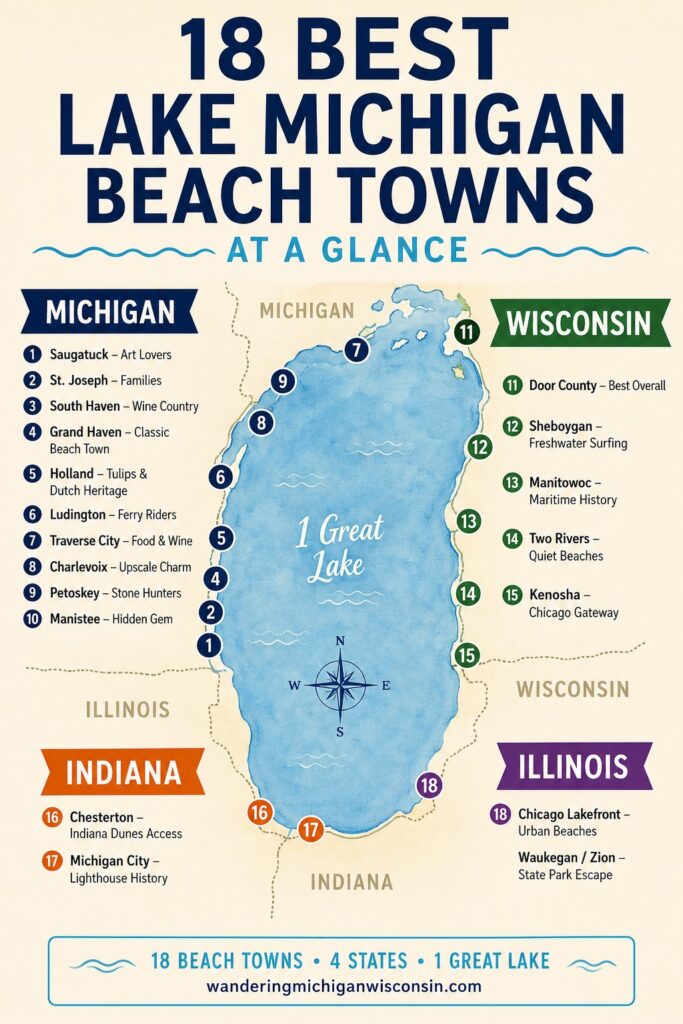
Lake Michigan Beach Towns in Michigan
Michigan claims more than 1,000 miles of Lake Michigan shoreline — more than any other state. The western shore of the Lower Peninsula is the heart of Great Lakes beach culture, lined with towns that each have a lighthouse, a downtown, and a stretch of soft sugar sand that rivals anything the ocean coasts can offer. I grew up in Michigan, and these towns feel like home to me.
1. Saugatuck – Best for Art Lovers and Couples
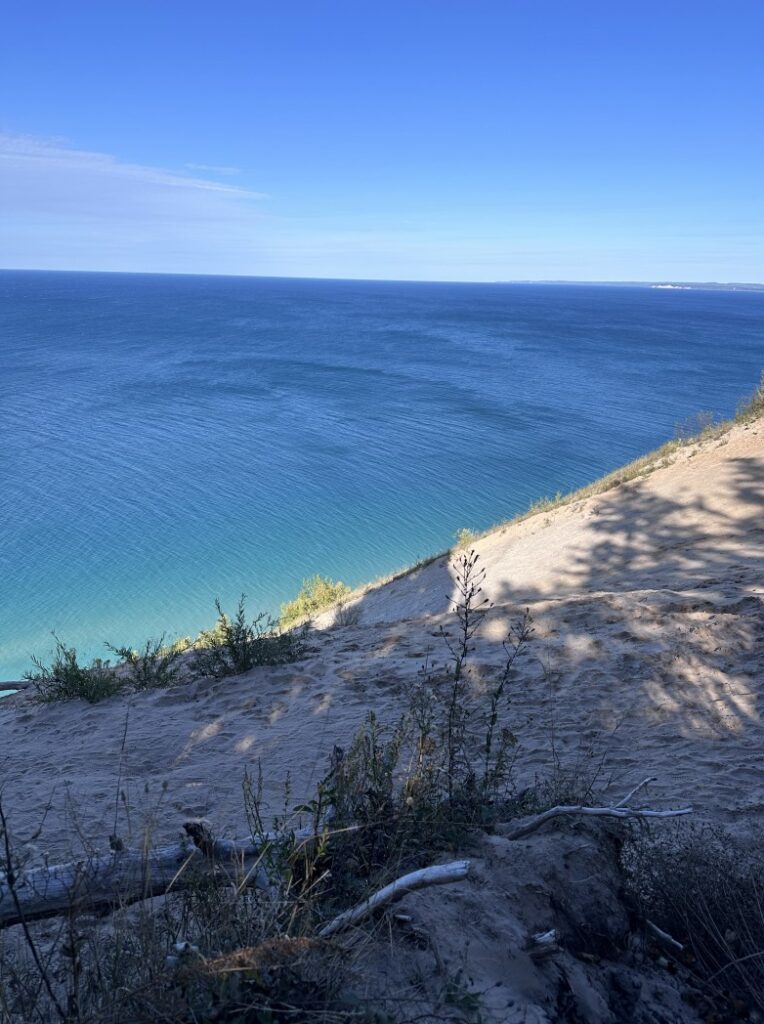
Saugatuck sits 40 miles southwest of Grand Rapids at the mouth of the Kalamazoo River, and it has been drawing artists since the early 1900s. Oval Beach, the town’s crown jewel, has been ranked among the best beaches in the world by Condé Nast Traveler — a claim that holds up in person. The sand is white and deep, the water runs clear blue-green on calm days, and the dunes behind the beach rise high enough to make you feel like you have left the Midwest entirely.
Beyond the beach, Saugatuck’s downtown is one of the most walkable on the Michigan shore, with galleries, independent restaurants, and the famous Saugatuck Dune Rides — open-air dune buggy tours that climb to spectacular lake overlooks. The chain ferry across the Kalamazoo River, hand-pulled by a rope, has operated since 1857 and costs only a dollar.
Accessibility: Oval Beach has a paved accessible path from the parking area and beach wheelchairs available for loan through the city parks department – call ahead to reserve. The downtown is flat and walkable with wide sidewalks. The Saugatuck Dune Rides are not wheelchair accessible due to vehicle design, but the overlook area is reachable by an alternative route. Sensory note: Oval Beach can be loud on summer weekends with crowds and music. No formal audio tours, but park staff are helpful. Hearing loop: not available at city beach facilities. Pets permitted at Oval Beach before 10 a.m. and after 5 p.m.; prohibited during peak hours; service animals permitted at all times regardless of pet restrictions.
2. St. Joseph – Best for Families and First-Time Visitors
St. Joseph — St. Joe to anyone who has been there — sits on a high bluff above Lake Michigan at the Indiana border, 90 miles east of Chicago. Silver Beach County Park is one of the most family-engineered beaches on the lake: a wide, flat, accessible shoreline, a splash pad, a restored 1898 carousel, a nature center, and a beach volleyball court, all within walking distance of a compact and charming downtown. The twin lighthouses at the end of the pier are among the most photographed in Michigan.
St. Joe is the northern terminus of the West Michigan Pike, a historic byway connecting beach towns from the Indiana border to Traverse City. If you are planning a beach town road trip, this is the natural starting point heading north — or the triumphant finish heading south.
Accessibility: Silver Beach has a fully ADA-compliant path to the waterline, a beach wheelchair loan program, and accessible restrooms at the park. The carousel is accessible for riders who can transfer. Downtown St. Joseph is walkable on flat sidewalks with curb cuts throughout. Sensory note: the carousel plays music that carries to the beach — worth knowing for sensory-sensitive visitors. Hearing loop: available at the Silver Beach carousel center. Pets permitted on the beach before 9 a.m. and after 7 p.m.; service animals permitted at all times regardless of pet restrictions.
3. South Haven – Best for Wine Country Connections
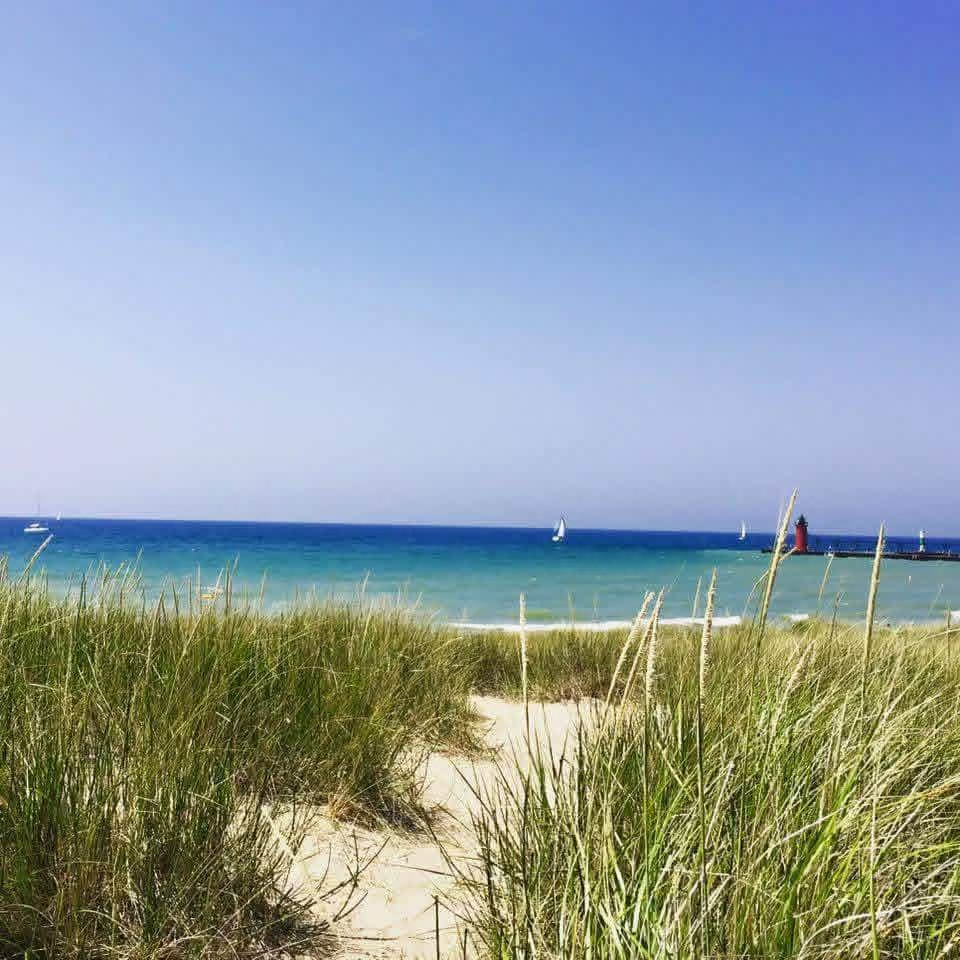
South Haven packs an enormous amount of character into a small footprint. The Black River splits the town before meeting Lake Michigan, creating a picturesque marina scene that photographers chase constantly. The beaches here — North Beach and South Beach separated by the river mouth – are wide and sandy, with the red lighthouse at the end of the pier providing one of the most recognizable silhouettes on the lake.
South Haven anchors the southwest end of the Kal-Haven Trail, a 34-mile paved trail connecting to Kalamazoo — excellent for cyclists. The town sits inside Michigan’s wine country, with Van Buren County home to more than a dozen wineries along the Lake Michigan Shore Wine Trail.
Accessibility: North Beach has a paved accessible path and beach wheelchair available from the city parks office. The boardwalk along the river is fully paved and flat — one of the most wheelchair-friendly waterfront walks on the Michigan shore. Downtown has some hilly terrain between the beach and main street. Sensory note: the marina area is lively with boat traffic and music on summer weekends; early mornings are quiet. Hearing loop: not available at city facilities. Pets permitted on the beach before 9 a.m. and after 7 p.m.; service animals permitted at all times regardless of pet restrictions.
4. Grand Haven – Best for the Full Beach Town Experience
Grand Haven is what people picture when they imagine a perfect Lake Michigan beach town. The two-mile boardwalk along the Grand River is lined with ice cream shops, restaurants, and the famous Musical Fountain — a synchronized water, light, and music show that has run every summer evening since 1962. Grand Haven State Park delivers a half-mile of sandy beach directly adjacent to the historic pier and twin lighthouses.
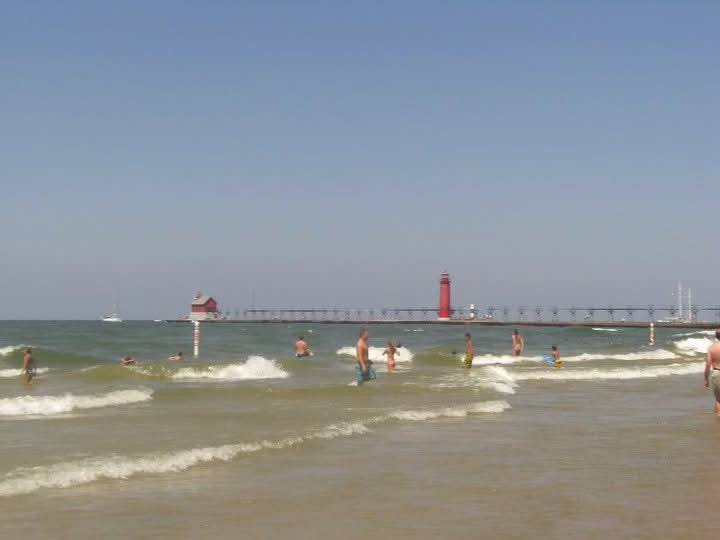
Grand Haven was named Coast Guard City USA in 1998 — the only city in the nation to hold that designation — and celebrates it every August with the Coast Guard Festival, one of the largest in the country.
Accessibility: Grand Haven State Park has an ADA-compliant path along the beachfront and beach wheelchairs available from the campground office. The boardwalk is fully paved and accessible the entire length. The Musical Fountain viewing area is flat, open, and accessible by wheelchair with dedicated viewing space. Sensory note: the Musical Fountain show involves loud music and bright lights. The beach can be very crowded on weekends. Hearing loop: not available at the fountain as of 2026. Pets permitted on the beach before 9 a.m. and after 7 p.m.; service animals permitted at all times regardless of pet restrictions.
5. Holland – Best for Dutch Heritage and Tulip Season
Holland’s Dutch heritage is not a marketing gimmick — it is genuine, deep, and delightful. The authentic De Zwaan windmill, built in the Netherlands in 1761 and relocated to Holland in 1964, still grinds grain. The tulip fields bloom every May during the Tulip Time Festival, drawing more than 500,000 visitors for one of the largest flower festivals in the country. Holland State Park has one of the most photographed beaches on the lake, anchored by Big Red — the iconic square red lighthouse that appears on more Michigan postcards than perhaps any other single image.
Tunnel Park, just south of Holland State Park, offers a unique experience: a wooden tunnel bored through the dune to a private beach on the other side.
Accessibility: Holland State Park has paved paths to the beach and beach wheelchairs available at the campground office. Big Red Lighthouse area is accessible by paved path. Tunnel Park involves a long wooden staircase through the dune — not accessible for mobility-limited visitors. De Zwaan windmill tours involve staircase climbing and are not wheelchair accessible, but grounds are accessible. Sensory note: Tulip Time Festival is extremely crowded with parade music and large crowds — advance planning essential. Hearing loop: not available at city facilities. Pets permitted at Holland State Park beach before 9 a.m. and after 7 p.m.; service animals permitted at all times regardless of pet restrictions.
6. Ludington – Best for Families and Ferry Riders
Ludington earns its reputation as one of the most complete beach vacation towns on the lake.
Ludington State Park — consistently rated one of the top state parks in the Midwest — offers seven miles of Lake Michigan beach, Hamlin Lake, the Big Sable Point Lighthouse, dune trails, and a river tubing run all within one park boundary. Downtown Ludington is compact, friendly, and within walking distance of Stearns Beach, which has 2,500 feet of flat, accessible shoreline.
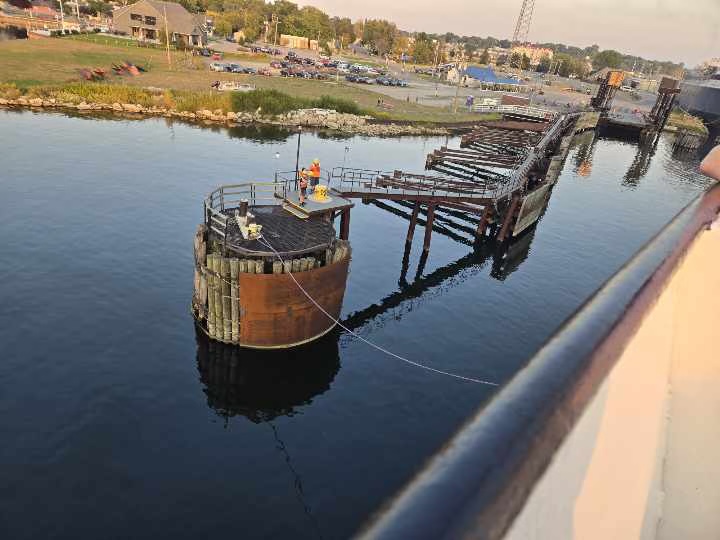
Ludington is also the Michigan port for the SS Badger — the last coal-fired passenger steamship in operation in the United States, which crosses Lake Michigan to Manitowoc, Wisconsin in four hours. If you are driving the Circle Tour, taking the Badger from Ludington to Manitowoc is the move that no competitor tells you about: it cuts hours off the drive and adds an experience that is one of a kind. Read my complete SS Badger guide.
Accessibility: Stearns Beach has three accessible walkways to the waterline and is one of the most accessible beaches on the lake. Beach wheelchairs available. Ludington State Park has track chairs available for free loan at both the Lake Michigan and Hamlin Lake beach houses — reserve 24 hours ahead by calling 231-843-2423. Accessible kayak launch at Hamlin Lake. Sensory note: Stearns Beach is active with families and beach sounds; the state park beach is quieter. Hearing loop: not available at park facilities. Pets permitted at Stearns Beach before 9 a.m. and after 7 p.m.; service animals permitted at all times regardless of pet restrictions. Pets permitted in Ludington State Park at designated areas only; service animals permitted throughout.
7. Traverse City – Best for Food, Wine, and Dunes
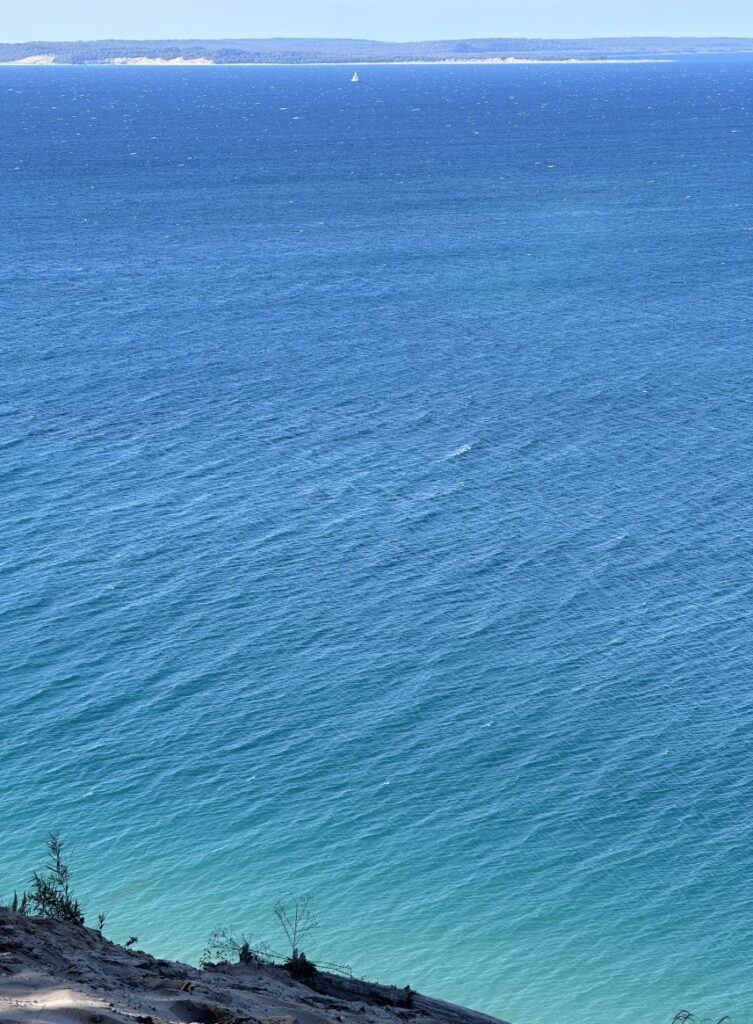
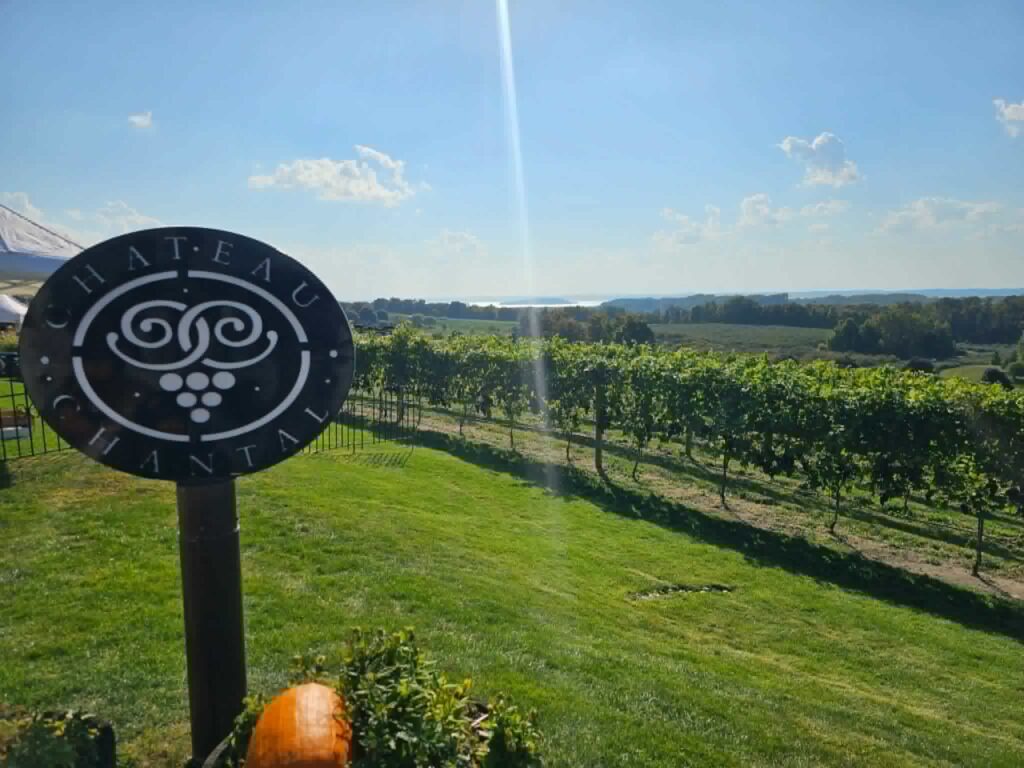
Traverse City is the undisputed capital of northern Michigan tourism and for good reason. The city sits at the base of Grand Traverse Bay, surrounded by cherry orchards, vineyard-covered hills, and spectacular scenery. The bay offers calmer water than open Lake Michigan — warmer for swimming, gentler for kayaking. Sleeping Bear Dunes National Lakeshore, 30 miles southwest, is the crown jewel: 400-foot sand dunes above Lake Michigan, named the Most Beautiful Place in America by Good Morning America voters in 2011.
Traverse City’s downtown is one of the most sophisticated small-city downtowns in the Midwest — James Beard-nominated restaurants, a thriving brewery scene, independent bookstores, and a Saturday farmers market that draws regional producers. The National Cherry Festival every July is the town’s signature event.
distance
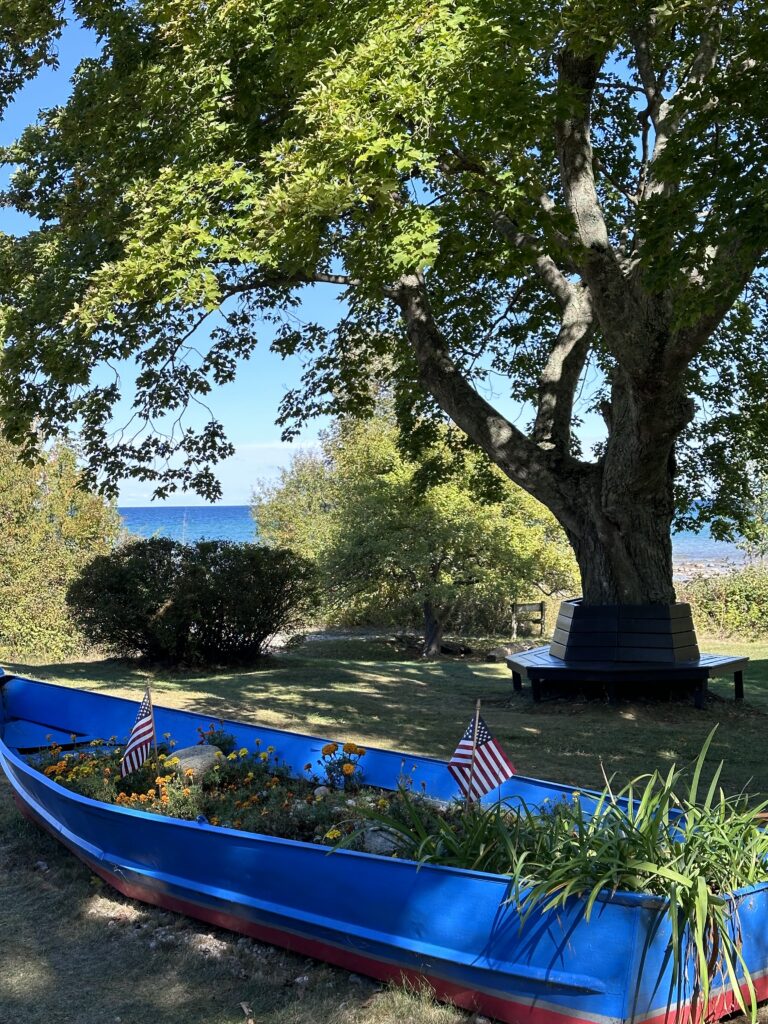
The Grand Traverse Lighthouse sits at the very tip of the Leelanau Peninsula, where Lake Michigan meets Grand Traverse Bay. The grounds are open, free, and offer some of the most spectacular water views in northern Michigan — including a rocky shoreline unlike anything on the sandy western shore.
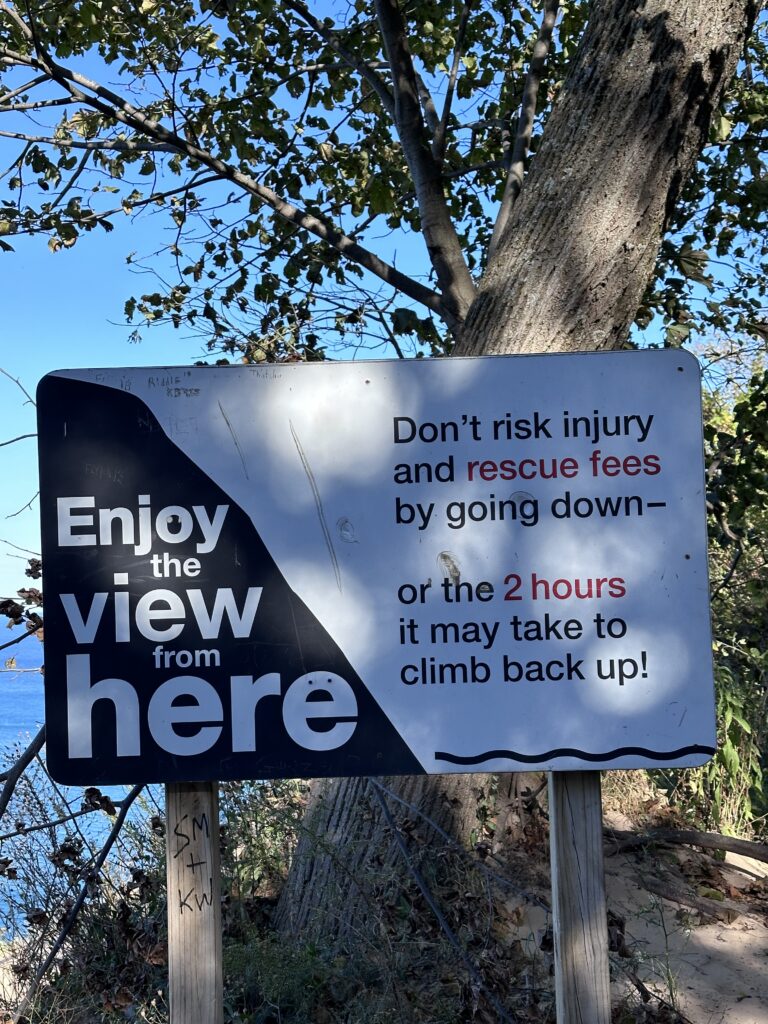
Accessibility: Traverse City State Park beach is fully accessible with paved paths. Sleeping Bear
Dunes National Lakeshore: the Philip A. Hart Visitor Center is fully accessible. The Dune Climb is not wheelchair accessible, but the Empire Bluff Trail (1.4 miles round trip) offers lake views accessible to most mobility levels. The park offers EnChroma color-blind glasses at the visitor center and audio description resources. The Pierce Stocking Scenic Drive offers spectacular views from a vehicle with minimal physical exertion — ideal for mobility-limited visitors.
Sensory note: the Dune Climb area is very busy in summer. Hearing loop: available at the Philip A. Hart Visitor Center. Pets permitted at Traverse City State Park beach before 9 a.m. and after 7 p.m.; service animals permitted at all times regardless of pet restrictions. Pets permitted on the Dune Climb and Pierce Stocking Drive but prohibited in backcountry; service animals permitted throughout.
8. Charlevoix – Best for Upscale Charm and Architecture
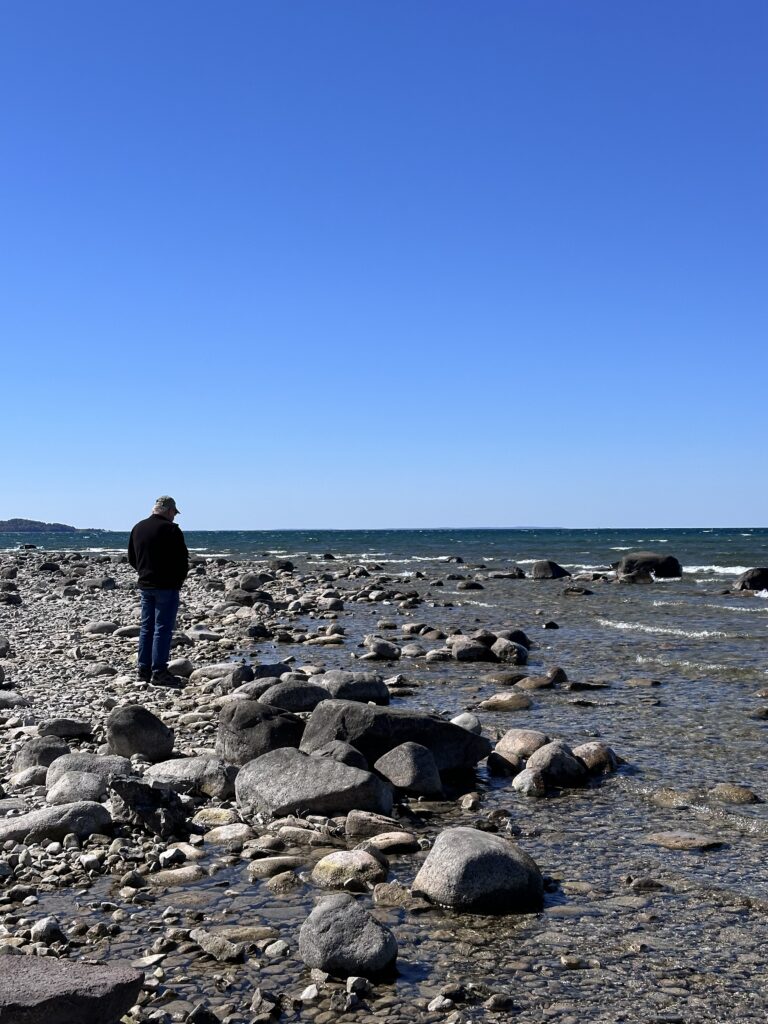
Charlevoix sits between Lake Michigan and Lake Charlevoix, connected to both by a narrow channel that drawbridges span — boat traffic stops car traffic, and nobody minds, because watching sailboats pass through the center of town is half the entertainment. Michigan Beach Park, right downtown, is a wide sandy beach with a view of the Round Lake channel lighthouse.
Charlevoix’s most unusual attraction is the Earl Young Mushroom Houses — organically shaped stone cottages built between the 1920s and 1950s that look like they grew from the earth rather than being built on it. A self-guided walking tour takes about an hour and is free.
Accessibility: Michigan Beach Park is accessible by paved path from the parking area. The Round
Lake channel drawbridge walk is paved and accessible. The Mushroom House walking tour covers about one mile of neighborhood sidewalk — manageable for most mobility levels with rest points available. Sensory note: boat traffic through the channel creates engine noise. Hearing loop: not available at city facilities as of 2026. Pets permitted at Michigan Beach Park in designated areas; service animals permitted at all times regardless of pet restrictions.
9. Petoskey – Best for Stone Hunters and Slower Travel
Petoskey is where the lake slows you down. The town sits at the southern end of Little Traverse Bay, and its Gaslight District is one of the most well-preserved Victorian commercial downtowns in Michigan. Ernest Hemingway spent boyhood summers in the area and set several of his Nick Adams stories here.
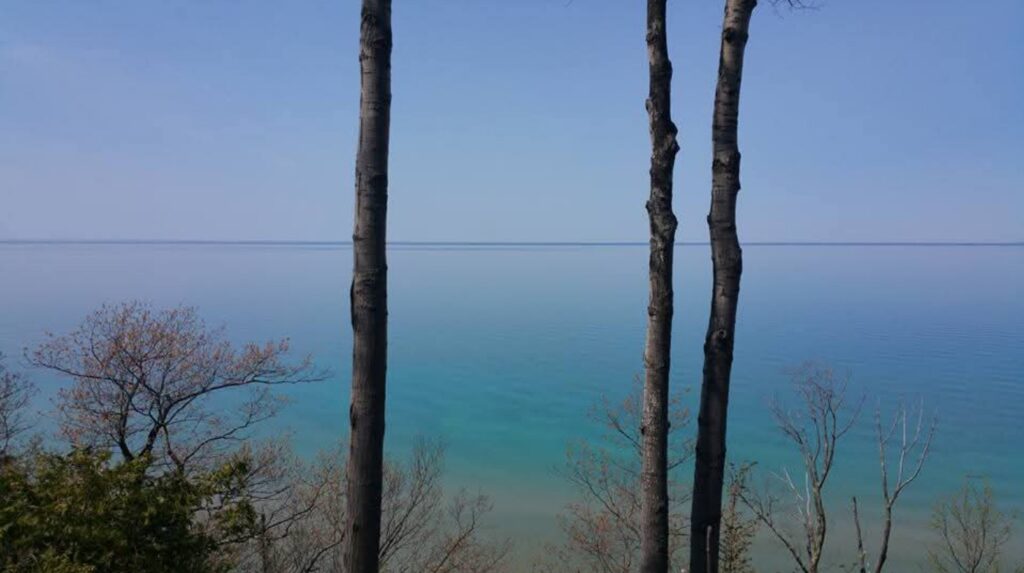
Petoskey State Park beach is famous for one thing above all else: Petoskey stones. These fossilized coral specimens — the Michigan state stone — wash up on the beach and reveal their distinctive hexagonal pattern when wet. Stone hunting along the shore is a legitimate local sport.
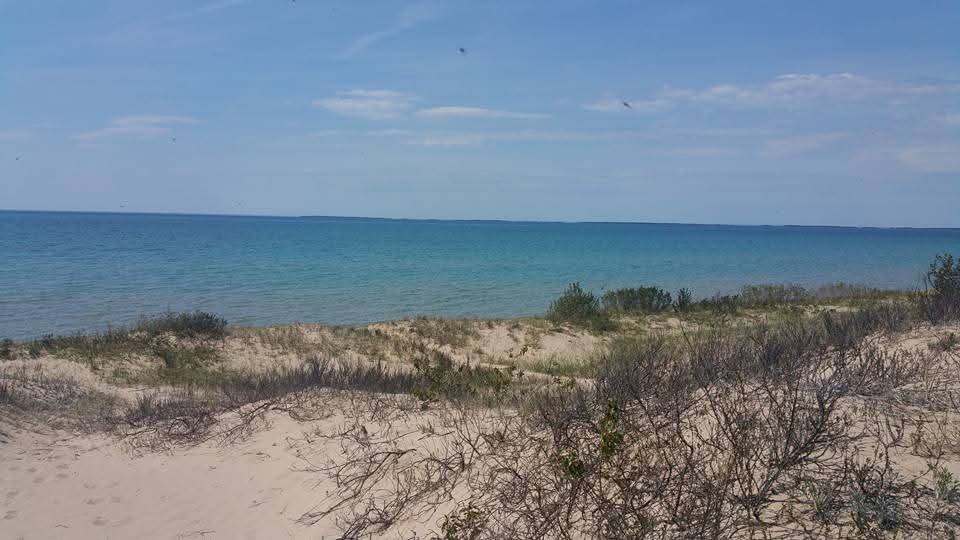
Accessibility: Petoskey State Park beach is accessible via paved path. The Gaslight District
downtown is flat and walkable with curb cuts throughout. Magnus Park beach in town has accessible parking and a paved path to the shore. Sensory note: Petoskey is quieter than busier Michigan resort towns — a genuine advantage for sensory-sensitive travelers. Hearing loop: not available at state park facilities. Pets permitted at Petoskey State Park beach before 9 a.m. and after 7 p.m.; service animals permitted at all times regardless of pet restrictions.
10. Manistee – Best for Off-the-Beaten-Path Authenticity
Manistee does not get the attention Saugatuck or Traverse City gets, and that is its appeal. The town has 25 miles of Lake Michigan shoreline, a Victorian downtown lined with buildings from the lumber boom era, and a Riverwalk along the Manistee River that connects shops and restaurants without requiring a car. First Street Beach is wide and sandy with a classic pier lighthouse view. Fifth Avenue Beach is the locals’ choice — quieter, less crowded, equally good.
Accessibility: First Street Beach has a paved accessible path and beach wheelchair available through the city parks department. The Riverwalk is fully paved and accessible the entire length. The breakwater walk to the lighthouse involves uneven concrete with gaps — not accessible by standard wheelchair. Sensory note: Manistee is quieter than the major resort towns — an advantage for noise-sensitive travelers. Hearing loop: not available. Pets permitted at city beaches before 9 a.m. and after 7 p.m.; service animals permitted at all times regardless of pet restrictions.
Lake Michigan Beach Towns in Wisconsin
Wisconsin’s Lake Michigan shore runs 300 miles from the Illinois border north through Kenosha,
Milwaukee, Sheboygan, Manitowoc, and Two Rivers before bending into the Door County peninsula. The Wisconsin side of Lake Michigan gets the sunrise, the sheltered harbors, and a quieter pace than the Michigan resort corridor. If you are crossing from Michigan on the SS Badger, you arrive in Manitowoc. If you are on the Lake Express, you arrive in Milwaukee. Both are excellent starting points for exploring Wisconsin’s shore.
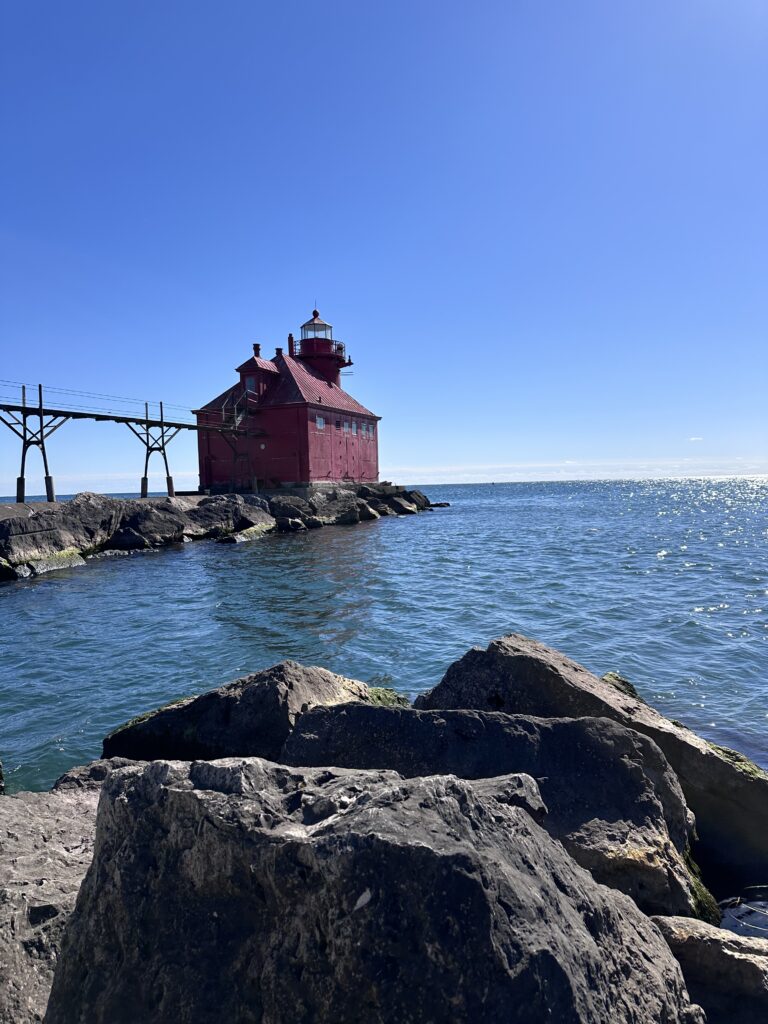
I live in central Wisconsin and have driven this shore in every season. Here is what I know.
11. Door County (Sturgeon Bay) – Best Overall Wisconsin Destination
Door County is Wisconsin’s most celebrated vacation destination — a 75-mile peninsula between Green Bay and Lake Michigan, dotted with state parks, cherry orchards, art galleries, and harbor towns. Sturgeon Bay, at the base of the peninsula, is the gateway. Peninsula State Park is one of the finest state parks in the Midwest. For Lake Michigan beaches, Cave Point County Park is the destination: a stretch of limestone shoreline where waves crash into sea caves in a display that looks more like the coast of Maine than the Midwest. Whitefish Dunes State Park, on the Lake Michigan side of the peninsula, delivers wide sandy beaches with dunes that surprise visitors expecting only rocky shoreline.
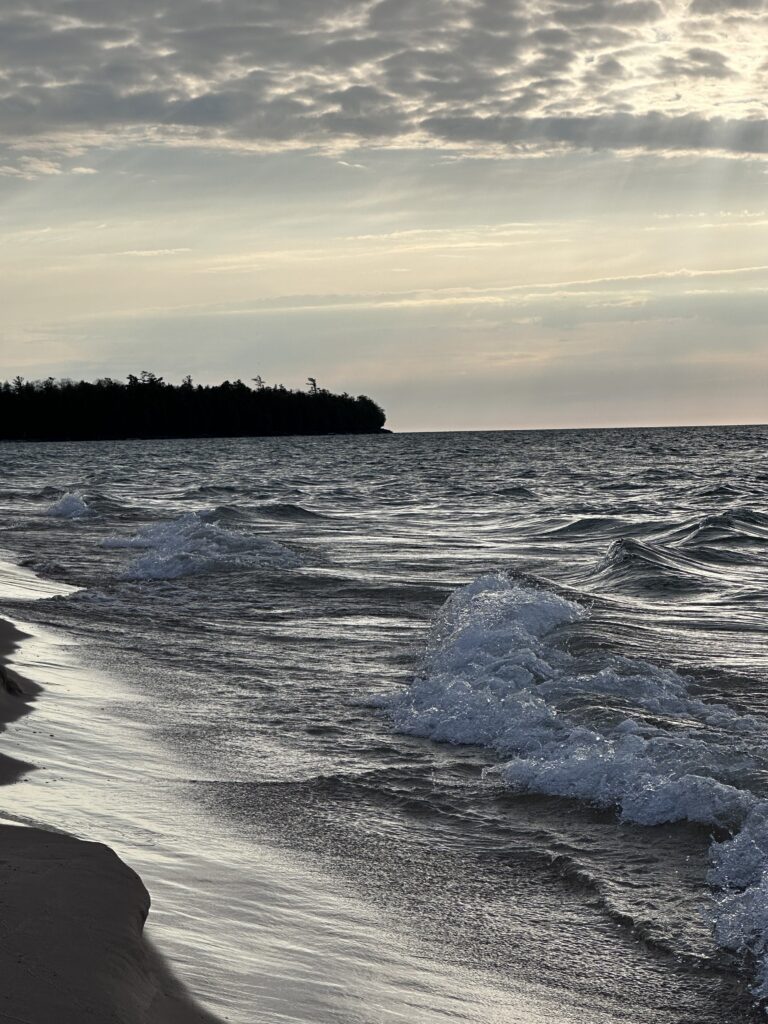
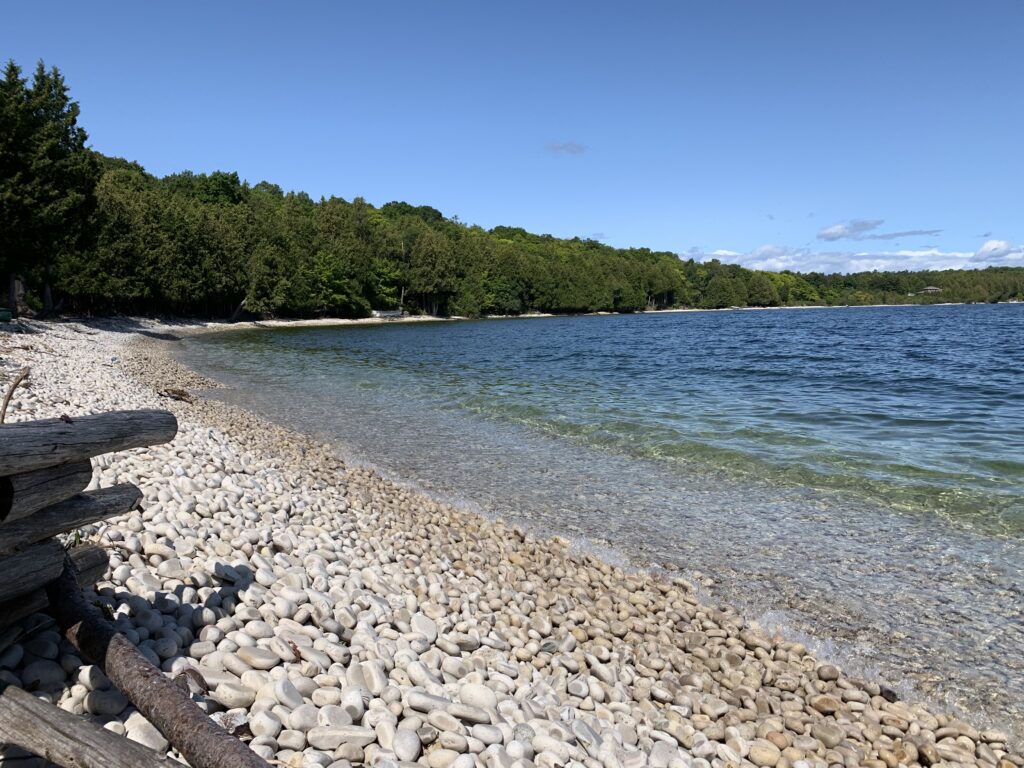
Washington Island, accessible by ferry from the tip of the peninsula, is Door County’s best-kept secret — smooth limestone pebble beaches, crystal clear water, and a quiet that is increasingly rare on this lake.
Baileys Harbor, Egg Harbor, Fish Creek, and Ephraim each offer distinct characters. The full peninsula is worth at least three days. Read my Wisconsin Lake Michigan beach towns guide for deeper Door County coverage.
Accessibility: Peninsula State Park has paved accessible paths and beach access at Nicolet Beach. Cave Point County Park involves a short trail over uneven limestone — manageable for most but not accessible by standard wheelchair without assistance. Whitefish Dunes State Park has accessible parking and a paved path to the beach. Sensory note: Cave Point is loud with wave action. Whitefish Dunes is quieter. Hearing loop: not available at Door County state facilities as of 2026. Pets permitted in Wisconsin state parks in designated areas on leash; service animals permitted throughout regardless of pet restrictions.
12. Sheboygan – Best for Surf Culture and Fresh Fish
Sheboygan may be the most underrated Lake Michigan beach town in Wisconsin. The city has
developed a genuine surf culture — Lake Michigan surf breaks here on the right days, and Sheboygan has hosted international surfing competitions. Kohler-Andrae State Park, just south of the city, protects a remarkable stretch of sand dunes and 2.5 miles of beach that feels far more remote than it is. The boardwalk trail through the dunes at Kohler-Andrae is one of my favorite walks on the Wisconsin shore.
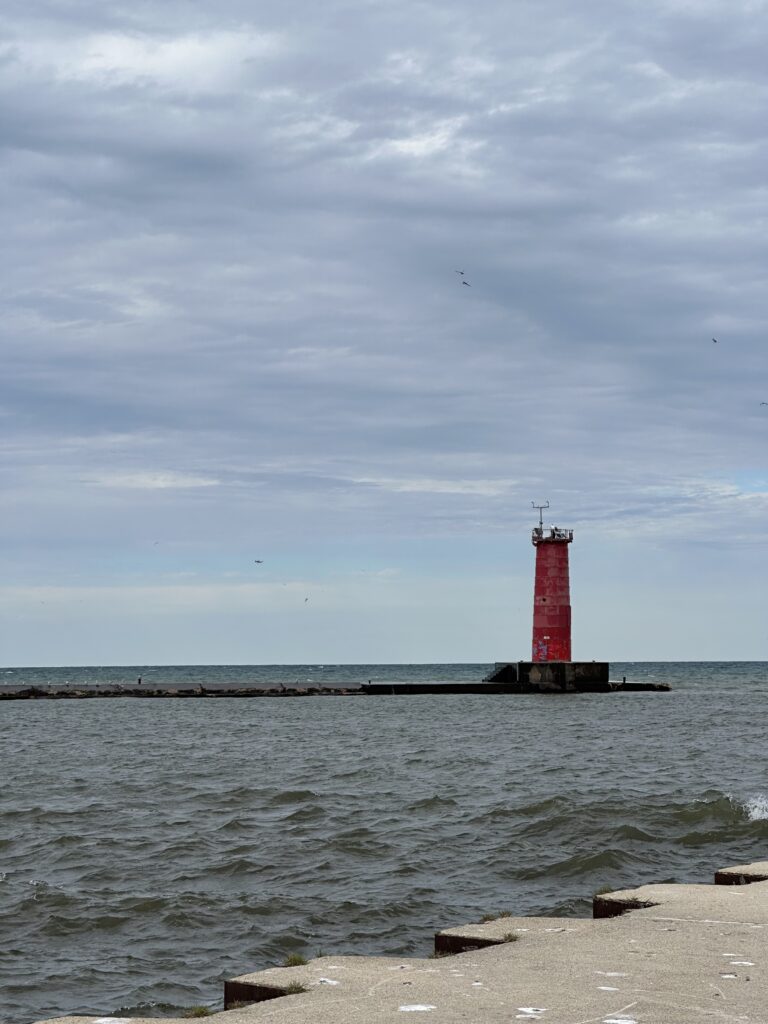
Downtown Sheboygan is enjoying a genuine revitalization, with a lakefront trail, renovated marina, and a restaurant scene built around the city’s strong German and Hmong culinary traditions. The Friday night fish fry is non-negotiable.
Accessibility: Kohler-Andrae State Park has an accessible boardwalk through the dunes and
ADA-compliant restrooms. Beach wheelchairs available at the park office — call ahead. The lakefront trail in the city is paved and accessible. Sensory note: the beach at Kohler-Andrae is quiet and wind-sheltered. Hearing loop: not available. Pets permitted at Kohler-Andrae in designated areas on leash; service animals permitted throughout regardless of pet restrictions.
13. Manitowoc – Best for Maritime History and Ferry Connections
Manitowoc is the Wisconsin port for the SS Badger, which makes it the natural landing point for anyone crossing from Ludington, Michigan. The Wisconsin Maritime Museum, one of the finest freshwater maritime museums in the country, is a three-minute walk from the ferry dock — the WWII submarine USS Cobia is moored outside and open for tours. Mariners’ Trail, a seven-mile paved path along the lake, connects Manitowoc to Two Rivers and is one of the best recreational trails on the Wisconsin shore.
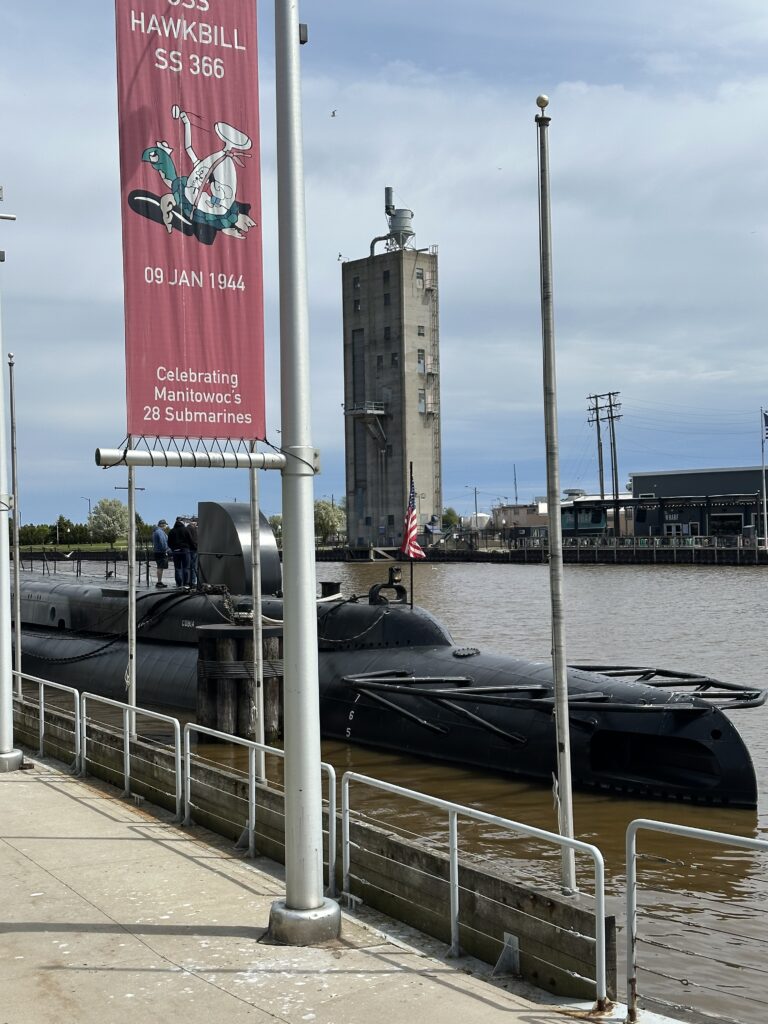
Accessibility: The Wisconsin Maritime Museum is fully ADA accessible with elevator access. The USS Cobia submarine tour involves tight hatches and vertical ladders — not accessible for mobility-limited visitors, but the exterior and museum exhibits are excellent without boarding. Mariners’ Trail is fully paved and accessible the entire length. Sensory note: the submarine interior is cramped and dark — high sensory load. The museum exhibits are calm and well-lit. Hearing loop: available in the museum theater. Pets not permitted in the museum; permitted on Mariners’ Trail on leash; service animals permitted throughout regardless of pet restrictions.
14. Two Rivers – Best for Quiet Beaches and Ice Cream History
Two Rivers sits six miles north of Manitowoc and claims an origin story worth knowing: the ice cream sundae was invented here in 1881 at Ed Berners’ Ice Cream Parlor. Point Beach State Park, just north of town, protects six miles of Lake Michigan beach and 2,800 acres of forest — some of the most uncrowded beach in Wisconsin. The Rawley Point Lighthouse, which has guided ships since 1853, stands at the park’s northern edge. Mariners’ Trail connects Two Rivers to Manitowoc by paved path along the shore.
Accessibility: Point Beach State Park has accessible parking and a paved path to the beach. Beach wheelchair available at the park office — call ahead. The Rawley Point Lighthouse grounds are accessible; the lighthouse interior involves stairs. Sensory note: Point Beach is quiet — an excellent choice for sensory-sensitive travelers. Hearing loop: not available. Pets permitted in the park in designated areas on leash; service animals permitted throughout regardless of pet restrictions.
15. Kenosha – Best Wisconsin Gateway from Chicago
Kenosha is the southernmost Wisconsin beach town on Lake Michigan and the most urban — which is not a criticism. The lakefront has been thoughtfully developed with a paved trail, a restored electric streetcar line that loops through the downtown, and a series of museums including the outstanding Kenosha Public Museum. Simmons Island Beach, bordered by a long pier and the red 1901 Pierhead Light, is a genuine beach — wide, sandy, and far better than anything available in Illinois just across the border.
Kenosha sits 30 miles south of Milwaukee and 60 miles north of Chicago, which makes it the easiest Wisconsin beach town to reach from either city.
Accessibility: The lakefront trail in Kenosha is fully paved and accessible the entire length. Simmons Island Beach has accessible parking and a paved path to the shoreline. The electric streetcar is accessible with low-floor boarding. Kenosha Public Museum is fully ADA accessible. Sensory note: Kenosha’s lakefront is more urban — more traffic noise and activity. Hearing loop: available at the Kenosha Public Museum. Pets permitted at Simmons Island Beach in designated areas on leash; service animals permitted throughout regardless of pet restrictions.
Lake Michigan Beach Towns in Indiana
Indiana has only 45 miles of Lake Michigan shoreline — the shortest of the four states — but it makes remarkable use of them. Indiana Dunes National Park (redesignated from National Lakeshore in 2019) protects the most ecologically diverse shoreline on the lake, with dunes that rival Michigan’s in height and a biodiversity that surprises everyone who assumed the Indiana lakeshore was nothing but industrial. The steel mills are there, yes — and so are herons, rare orchids, and one of the finest dune-to-forest ecosystems on earth.
16. Chesterton – Best for Indiana Dunes Access
Chesterton is the most convenient gateway to Indiana Dunes National Park, with a charming downtown that serves the park’s visitors well — good restaurants, independent shops, and the Yellow Brick Road Gift Shop (L. Frank Baum, who wrote The Wizard of Oz, was from Chesterton). Indiana Dunes National Park offers 15 miles of Lake Michigan beach across multiple access points. West Beach is the most developed with amenities. Mount Baldy, a living dune that moves east at four feet per year, is one of the most dramatic landforms on the lake.
Accessibility: Indiana Dunes National Park: the Dorothy Buell Memorial Visitor Center is fully ADA accessible. West Beach has an accessible boardwalk to the shoreline and accessible restrooms. Mount Baldy Beach is accessible at the base — the dune climb itself is not. The Calumet Trail is paved and accessible. Beach wheelchairs available at the visitor center — reserve in advance. The visitor center has an accessible audio program for vision-impaired visitors. Hearing loop: available at the visitor center. Pets permitted on the beach and on the Calumet Trail on leash; service animals permitted throughout regardless of pet restrictions.
17. Michigan City – Best for Lighthouse History
Michigan City sits at the eastern end of Indiana’s Lake Michigan shore. Washington Park Beach is wide, sandy, and anchored by the Old Lighthouse Museum — one of the oldest lighthouses on the Great Lakes, built in 1858 and now an excellent small museum. Indiana Dunes State Park, just west of the city, offers three miles of beach and challenging dune trails separate from the National Park.
Accessibility: Washington Park Beach has a paved accessible path and accessible restrooms. The
Old Lighthouse Museum has limited interior accessibility — ground floor accessible, upper floors not. Indiana Dunes State Park has accessible parking and a paved path to the beach. Sensory note: Washington Park is an active beach with boat traffic nearby; the state park beach is quieter. Hearing loop: not available at park facilities. Pets permitted at Washington Park Beach in designated areas on leash; service animals permitted throughout regardless of pet restrictions.
Lake Michigan Beach Towns in Illinois
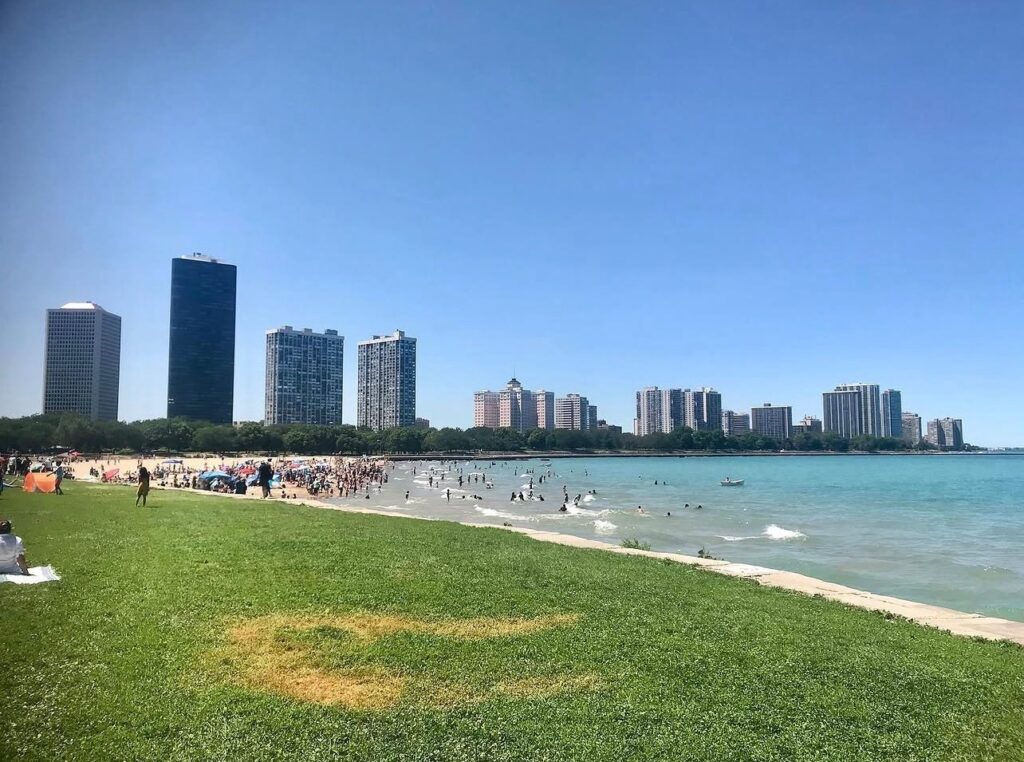
Illinois has 63 miles of Lake Michigan shoreline, and nearly all of it is Chicago. I am going to be honest with you — if you are looking for a quiet beach town in Illinois, the state does not offer one in the way Michigan and Wisconsin do. What Illinois offers instead is something world-class: the Chicago lakefront. Thirty miles of parks, beaches, trails, and museums backed by one of the most spectacular skylines on earth.
18. Chicago Lakefront and Waukegan – Illinois Highlights
Chicago’s lakefront delivers everything the city delivers — scale, excellence, and stimulation. North Avenue Beach is the most famous, a wide urban beach with a boathouse-turned-restaurant and volleyball courts. Oak Street Beach, just north of the Magnificent Mile, has skyline views that no other beach in America can match. The lakefront trail runs 18 miles connecting neighborhoods and parks. North of Chicago, Waukegan has a small beach and a working harbor. Illinois Beach State Park in Zion has six miles of beach — the facilities were tired as of my last visit, but the beach itself is real and uncrowded. It is worth a stop on the Circle Tour.
Accessibility: Chicago’s lakefront trail is fully paved and accessible the entire 18-mile length. North Avenue Beach has accessible restrooms and beach mat access. The Chicago lakefront is fully accessible by public transit including accessible buses and the L train. Illinois Beach State Park has paved accessible paths to the beach. Sensory note: Chicago’s lakefront is extremely busy and loud in summer — high sensory load. Early mornings are significantly calmer. Hearing loop: available at multiple Chicago cultural institutions adjacent to the lakefront. Pets permitted on Chicago beaches before 9 a.m. and after 9 p.m. in designated areas; service animals permitted at all times regardless of pet restrictions.
Crossing Lake Michigan: The Ferry Connection
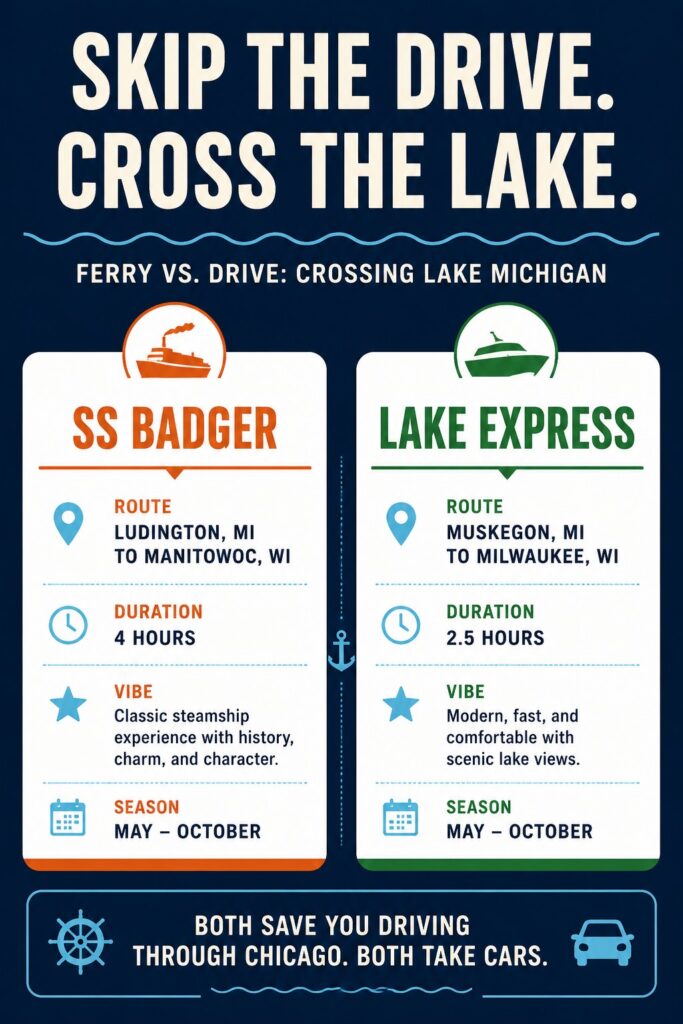
The detail that no other Lake Michigan beach town guide covers is this: you do not have to drive around the lake to get from the Michigan shore to the Wisconsin shore. Two car ferries make the crossing directly, saving hours and adding one of the most memorable experiences on the entire Circle Tour.
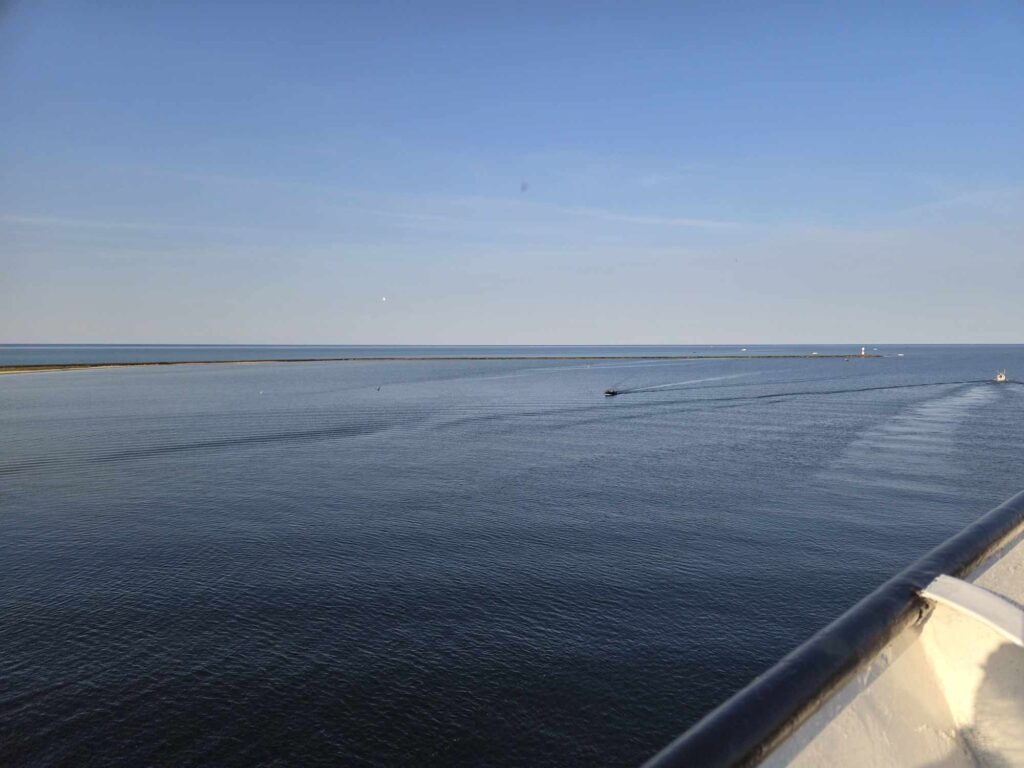
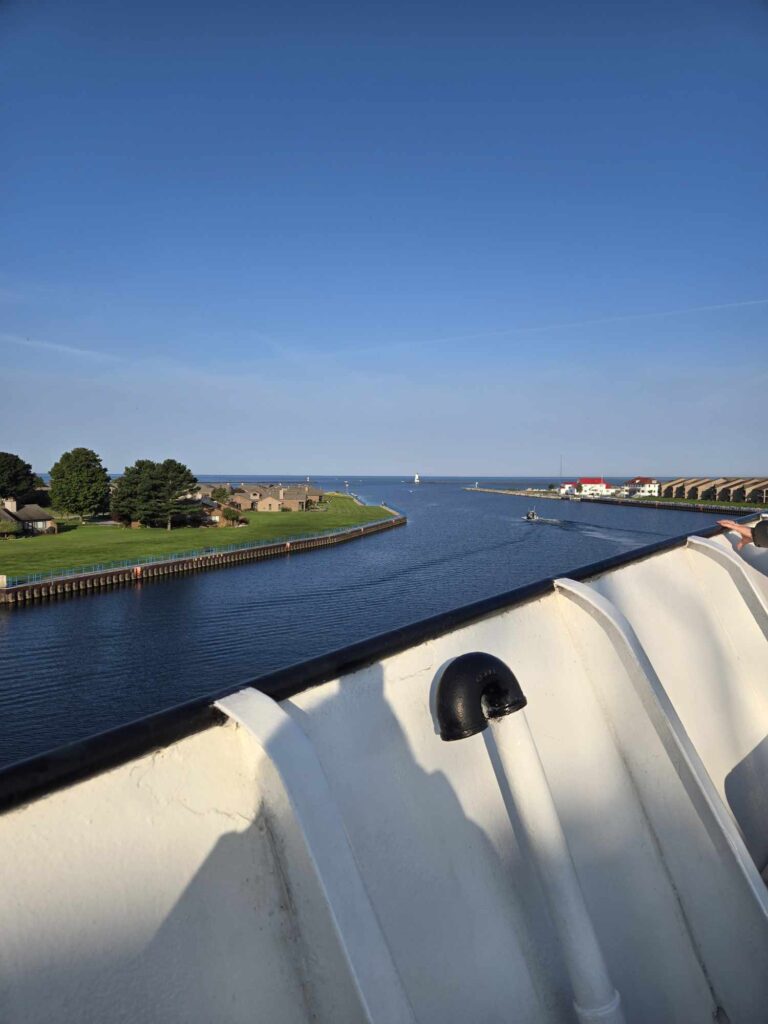
The SS Badger runs between Ludington, Michigan and Manitowoc, Wisconsin in four hours. It is the last coal-fired passenger steamship in operation in the United States, launched in 1953, and crossing on it feels like time travel in the best possible way — there are staterooms, a dining area, an open deck, and entertainment for the kids. The Lake Express runs between Muskegon, Michigan and Milwaukee, Wisconsin in 2.5 hours on a modern high-speed catamaran. Both ferries take cars, motorcycles, bikes, and pedestrians. Both run May through October.
I have taken the SS Badger with my husband, and the four hours on the open water passed faster than I expected. Arriving in Manitowoc with the whole Wisconsin shore ahead of us, rather than three more hours of driving through Chicago, was worth every dollar of the fare.
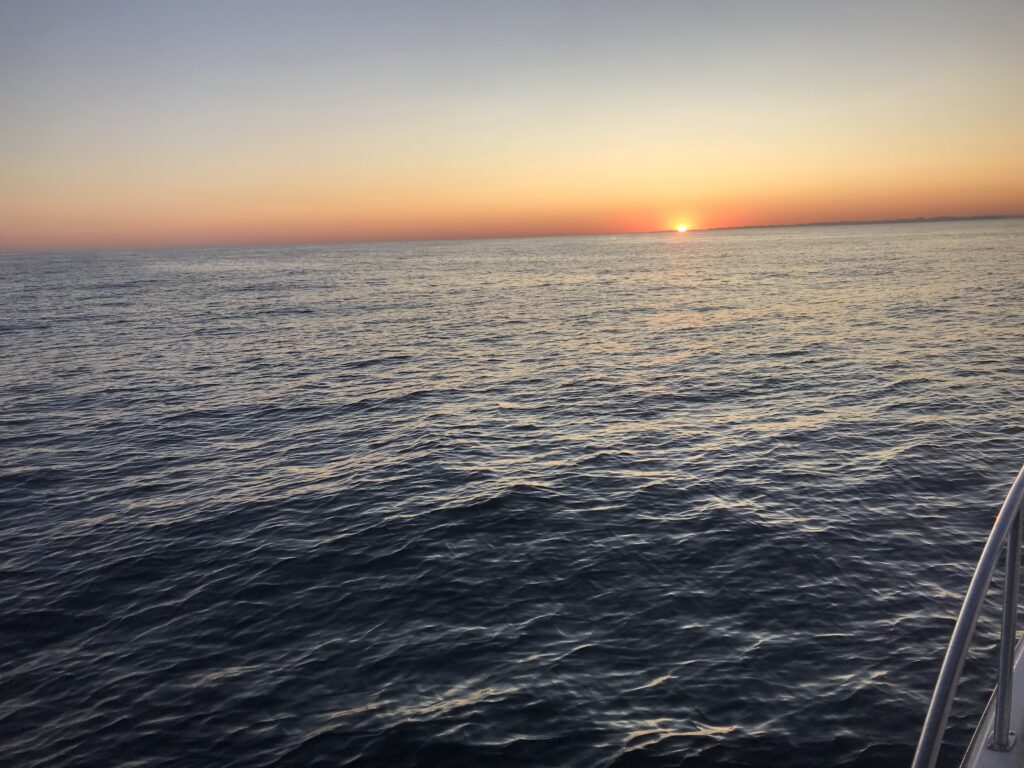
Read my complete guide to the car ferry across Lake Michigan.
The Time Zone You Didn’t Expect
Here is something every Circle Tour traveler needs to know that almost no guide mentions: the Lake Michigan Circle Tour crosses time zones twice, and not in a simple way. Michigan’s Lower Peninsula operates on Eastern Time. Wisconsin, Illinois, and the Indiana Dunes area operate on Central Time.
This means that when you cross from Michigan into Indiana or Wisconsin — whether by ferry or by road at the southern tip — you gain an hour heading west. When you cross back into Michigan, you lose that hour. Ferry departure times, restaurant reservations, and state park closing times all operate on local time. The SS Badger departure time in Ludington is Eastern Time. Arrival in Manitowoc is Central Time — you gain an hour on that crossing. Plan accordingly.es are listed in local time.
Planning Your Visit
Best Time to Visit
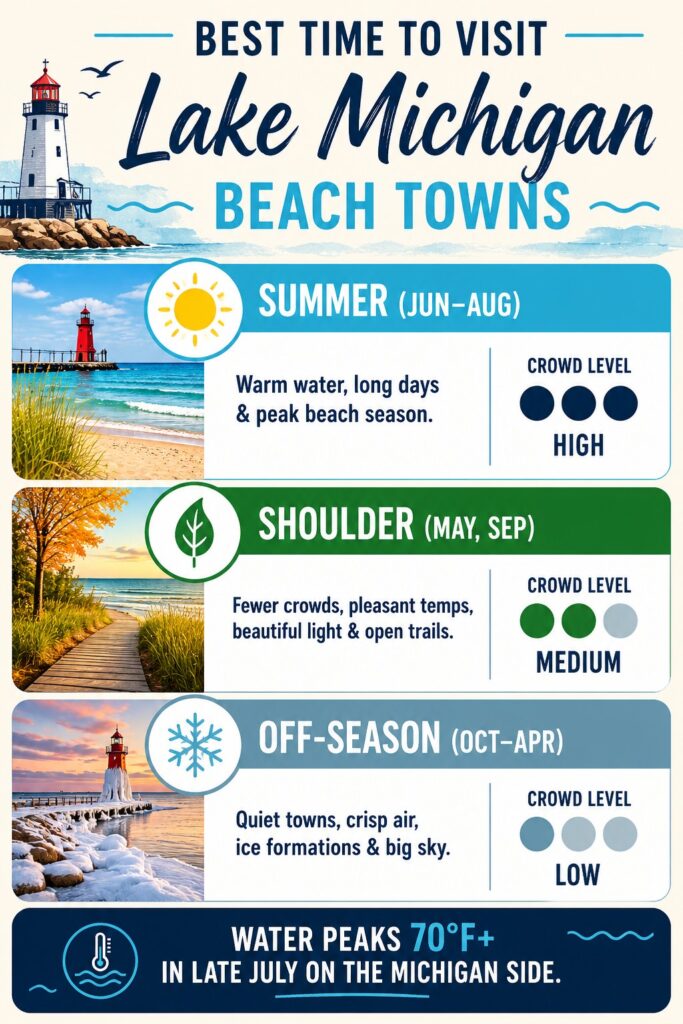
The Lake Michigan beach season runs Memorial Day through Labor Day, with peak crowds from late June through mid-August. Water temperatures peak in late July and early August, when the lake reaches the low-to-mid 70s on the Michigan side — genuinely swimmable. September is my favorite month on the lake: the crowds thin, the light turns golden, and the towns are still fully open.
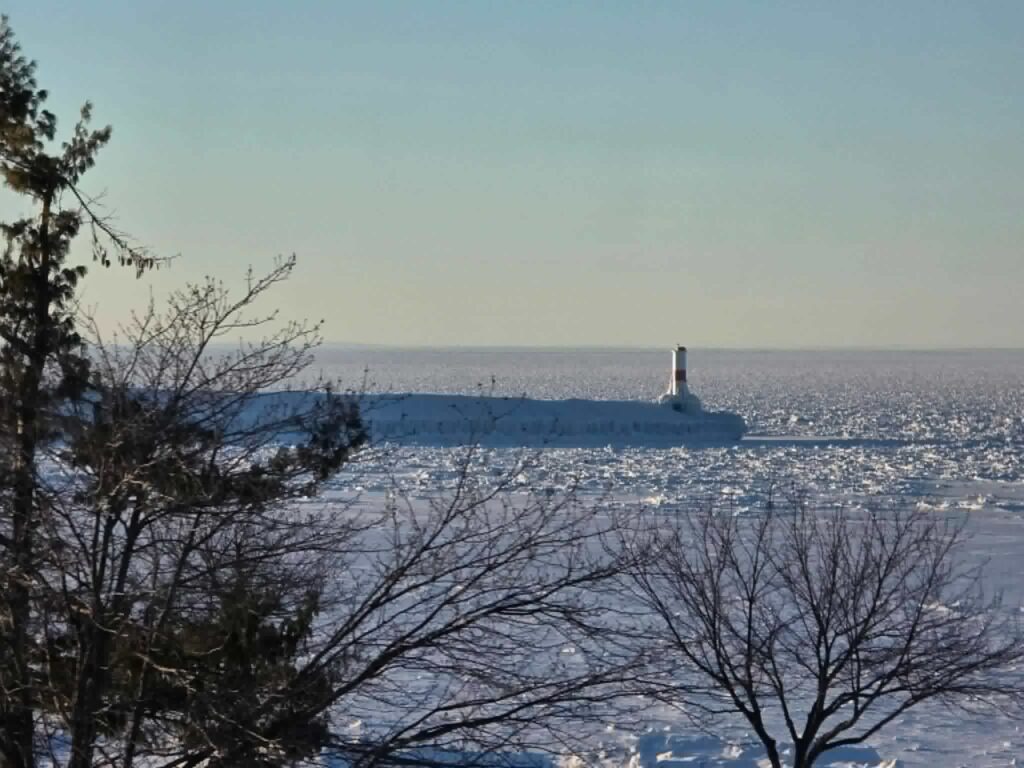
October brings dramatic skies and closing crowds but rewards those who come. Winter closes most beach amenities but leaves the dunes and lighthouses accessible for those willing to bundle up.
Where to Stay
Every town in this guide has lodging ranging from well-known hotel brands to locally owned bed and breakfasts that will be the highlight of your trip. I recommend staying in town rather than outside it for the walkability — beach towns reward those who can step out the door and be at the water in ten minutes.
Getting Around
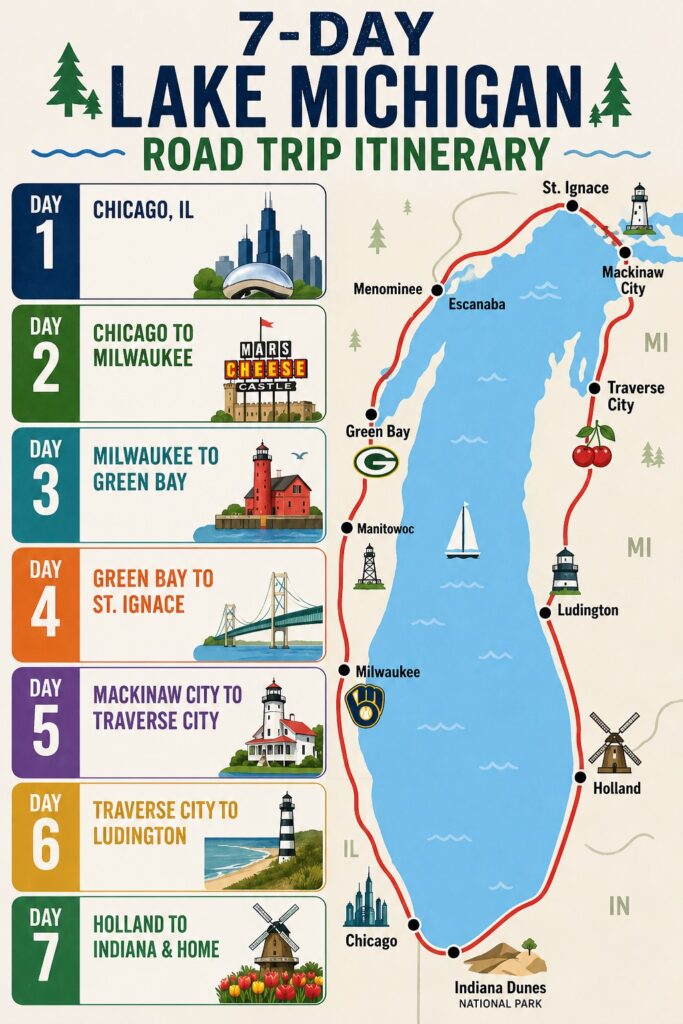
Most Lake Michigan beach towns are small enough to walk once you are there, but getting between towns requires a car. The Lake Michigan Circle Tour route is well-signed with the blue-and-white circle tour markers in all four states. Allow at least five days to do the full loop justice — seven is better. Read my complete Lake Michigan Circle Tour road trip guide.
Packing for Lake Michigan
The lake generates its own weather. Morning fog, afternoon thunderstorms, and wind chills that
surprise visitors even in July are all part of the experience. A light windproof jacket, polarized sunglasses for the water glare, and waterproof sandals cover most situations. Stability poles are my personal must-have for beach and dune terrain — the sand shifts underfoot and the poles give me confidence on uneven surfaces.
Lake Michigan Beach Towns: Frequently Asked Questions
The best Lake Michigan beach towns depend on what you are looking for. Saugatuck, Michigan leads for art lovers and couples. St. Joseph, Michigan is best for families. Traverse City, Michigan is best for food and wine. Sturgeon Bay and Door County, Wisconsin is the best Wisconsin destination. Chesterton, Indiana gives the best access to Indiana Dunes National Park. For all four states in one trip, the Lake Michigan Circle Tour is the definitive answer.
Michigan’s eastern shore has the warmest water and the deepest sand because the prevailing westerly winds push warm surface water toward the Michigan side across the full width of the lake. Michigan also has more beach towns with developed amenities. Wisconsin’s western shore has excellent beaches — particularly at Door County, Kohler-Andrae State Park, and Point Beach State Park — but they are fewer and more spread out. Indiana Dunes has spectacular dune beaches that rival Michigan’s best.
Accessibility varies by town. Ludington, Michigan and St. Joseph, Michigan are among the strongest performers, with ADA-compliant beach access, beach wheelchair loan programs, and accessible downtown areas. Indiana Dunes National Park has strong federal accessibility infrastructure. This guide covers specific accessibility details — mobility, vision, hearing, and sensory — for every town listed.
Most Lake Michigan beaches permit dogs before 9 a.m. and after 7 p.m. during peak beach season. State parks in Wisconsin and Michigan permit pets in designated areas on leash. Service animals are permitted at all beaches and parks at all times regardless of pet policies. Specific pet policies are noted for every town in this guide.
Two car ferries cross Lake Michigan directly. The SS Badger runs between Ludington, Michigan and Manitowoc, Wisconsin in four hours. The Lake Express runs between Muskegon, Michigan and Milwaukee, Wisconsin in 2.5 hours. Both run May through October and take cars, motorcycles, and bikes. Book well in advance for summer crossings — both ferries sell out. Read my full car ferry guide.
The Lake Michigan Circle Tour is a designated scenic driving route that follows the shoreline of Lake Michigan through all four states — Michigan, Wisconsin, Illinois, and Indiana — for approximately 1,100 miles. It is marked with blue-and-white circle tour signs throughout. Most travelers complete the loop in five to seven days. Read my complete Circle Tour guide.
Lake Michigan touches two time zones. Michigan’s Lower Peninsula is on Eastern Time. Wisconsin, Illinois, and the Indiana Dunes area are on Central Time. When traveling the Circle Tour westward from Michigan, you gain one hour going into Wisconsin or Indiana. When returning to Michigan, you lose one hour. Factor this into ferry departure times and dinner reservations.
Lake Michigan Beach Towns: Final Thoughts
Eighteen towns. Four states. One lake.
Lake Michigan is the freshwater Riviera of North America, and its beach towns reward everyone who comes — whether you arrive chasing the perfect sunset over the dunes in Saugatuck, hunting Petoskey stones on a quiet September morning, watching waves crash into limestone caves at Door County, or pulling into Manitowoc on the SS Badger after four hours on the open water.
No two of these towns are alike, which is the whole point. The lake connects them all, but each one has its own character, its own lighthouse, its own reason to stay one more day.
My advice is simple:
Give yourself more time than you think you need. The lake will make sure of it.
If you are planning the full Circle Tour, start with my Circle Tour road trip guide. If you are deciding between the Michigan and Wisconsin shores, my Wisconsin Lake Michigan beach towns guide goes deeper on the Wisconsin side
More of Wandering Michigan Wisconsin
Road Trip Around Lake Michigan: The Ultimate Itinerary
Visiting Mackinac Island In October: Everything You Need To Know
17 Tahquamenon Falls Things To Do: The Ultimate Guide 2025
30 Best Small Towns In Michigan To Visit In 2025
31 Stops to Add to Your 2023 Fall Color Tour Michigan
21 Best Things To Do In Pictured Rocks (2025)
Visiting Mackinac Island In October: Everything You Need To Know
17 Tahquamenon Falls Things To Do: The Ultimate Guide 2025
15 Hiawatha National Forest Best Hikes